


Free Verse: How Line and Cadence Replace Meter
Free verse is open-form poetry with no prescribed meter or rhyme scheme. The line, cadence, and sound do the work meter used to do.
Updated 11 min read
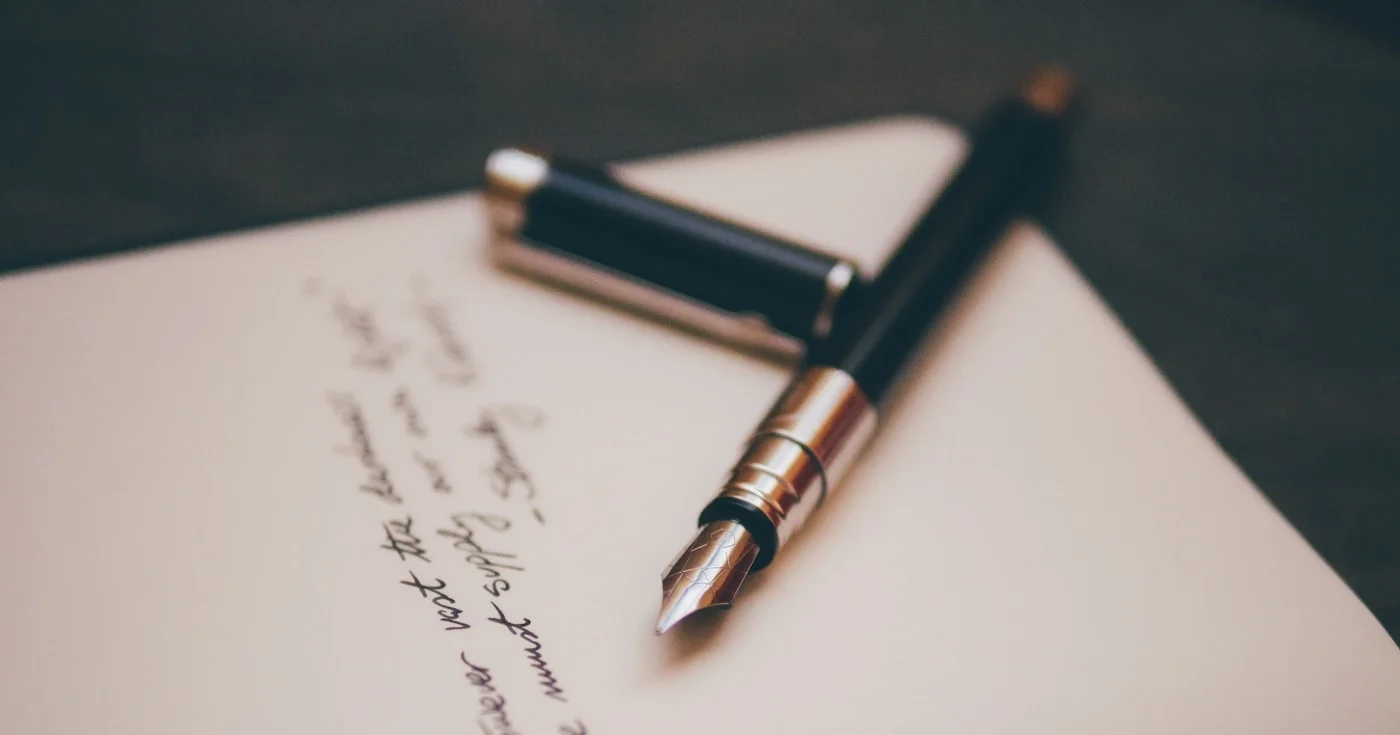

Free verse is open-form poetry with no prescribed meter or rhyme scheme. The line, cadence, and sound do the work meter used to do.
Free verse is open-form poetry with no prescribed meter or rhyme scheme. Walt Whitman and William Carlos Williams still organize the page with the line, recurring cadence, and sound. Blank verse stays unrhymed but keeps a metrical plan, almost always iambic pentameter.
Since the early 20th century, the majority of published lyric poetry has been written this way. The live problem is a draft that looks like verse and reads like a caption: a sincere sentence with the Enter key used as decoration.
This article is the poetry form, not a Bible verse and not a printable free poem.
The Poetry Foundation definition still holds: nonmetrical, nonrhyming lines that follow the natural rhythms of speech. A regular pattern of sound or rhythm may emerge, but you do not compose to a metrical plan.
Edward Hirsch on poets.org adds the visual half. The form is not dictated by an established meter, and it often borrows the rhythms of speech.
The graphic line is what keeps it from being prose. Hirsch quotes Pound's craft rule: compose in the sequence of the musical phrase, not in sequence of a metronome.
Al Filreis at Penn names the mechanism more precisely than a glossary stub. The form is based on irregular rhythmic cadence: the recurrence, with variation, of phrases, images, and syntactical patterns, rather than on the foot.
Units are larger than iambs. Rhyme may appear. When it does, it is used freely, not as a governing scheme.
"Free" is relative. Britannica puts it that way on purpose: the poem is organized to the cadences of speech and to image patterns, not to a regular metrical scheme. Merriam-Webster is the dictionary floor: meter irregular in some respect, or rhythm that is not metrical.
Whitman's cadenced long line in Leaves of Grass (Whitman Archive; self-published 1855) is the usual American starting point.
The Whitman Archive lists six American editions, plus an 1891–92 "deathbed" reprint of 1881–82. The line is built on biblical parallelism rather than on a French syllable count.
The English label arrived later as a translation of French vers libre. Whitman did not invent cadence. Hebrew psalms and earlier English experiments already had the technology.
French vers libre of the 1880s is the other stream. The unit is the phrase, not a fixed alexandrine.
Gustave Kahn, Jules Laforgue, and others arrived at it independently in the late 1880s; Kahn claimed to have invented vers libre. Do not crown a sole inventor.
Imagists imported the idea into English. Eliot's "Reflections on Vers Libre" (New Statesman, 3 March 1917) is the warning that still holds: "Vers libre does not exist."
Later in the same essay he calls it a battle-cry of freedom, and says there is no freedom in art. The so-called vers libre which is good is anything but free. He closes: "There is only good verse, bad verse, and chaos."
Meter used to decide where the line turned and where the ear landed. In this form you still have to decide. Surabhi Balachander, in Oregon State's literary-terms lecture, puts the cost in workshop language: writing in free verse comes with responsibility, because each choice carries weight.
Prose is printed inside margins. Poetry is written in lines that need not obey the right margin. That is Mary Oliver's distinction, as Rebecca Hazelton restates it for the Poetry Foundation (8 September 2014).
James Longenbach's line in The Art of the Poetic Line (2008) is the direct answer to "what makes it poetry?": poetry is the sound of language organized in lines. Hazelton treats the line as a modifier of sense, syntax, sound, and rhythm.
Enjambment (the sentence keeps going) creates forward momentum. An end-stop (the thought completes at the break) creates a pause.
Short lines slow the eye. Long lines speed it.
If your lines run all the way to the right margin, you have written prose, however "poetic" the diction.
On r/Poetry, that is also how readers tell a poem from a caption. u/altarwisebyowllight (December 2025) on a draft that looked random: those breaks were not random. They created small pauses that enhanced what was being said, and that is what set the piece apart from being prose only.
Filreis's cadence is the old technology hiding under the new name. A phrase, an image, or a syntactical pattern comes back with variation. Biblical parallelism is the ancestor: two clauses that echo without rhyming.
Whitman's catalogs work this way. So does anaphora, the repeated opening that makes a long line feel inevitable. You can borrow a few metrical pulses or a local rhyme for a stretch and still stay in open form, as long as no scheme governs the whole poem.
Dropping a rhyme scheme does not mean dropping sound. Alliteration, assonance, consonance, and internal rhyme still organize the ear. Pound's "In a Station of the Metro" leans on repeated consonants and a crowd/bough assonance rather than on feet.
Williams's "This Is Just To Say" is the classroom exhibit for consonance doing rhythm's job: a found-note voice held together by repeated sounds, not by iambs. Incidental end-rhyme is legal. A couplet that appears once is not a scheme.
Land the line on a concrete noun or a verb. Pronouns, articles, prepositions, being verbs, and conjunctions rarely earn the break.
Gwendolyn Brooks's "We Real Cool," which lands on "we," is the famous exception, and it works because the pronoun is the pressure. The end word is where the eye rests. If it is a throwaway, the line was a margin, not a unit of attention.
"No rhyme" is one axis. Meter is the other. The line is the third.
Form | Meter | Rhyme | What does the work |
|---|---|---|---|
Closed form (sonnet) | Yes | Usually a scheme | Predetermined pattern |
Blank verse | Yes, iambic pentameter | No | Five-beat line |
Free verse | No prescribed plan | No governing scheme | Line, cadence, sound |
Prose poetry | None as verse | Not a verse scheme | Sentence and paragraph |
Blank verse is unrhymed iambic pentameter. Shakespeare's plays (not the sonnets) and Milton's Paradise Lost are the English canon. Both blank verse and this form can sound like speech.
Only blank verse keeps the five-beat line. Romeo's balcony speech is blank, not open: unrhymed, ten syllables, five stresses.
Prose poetry is the other neighbor people collapse into this form. Paul Hetherington and Cassandra Atherton, writing in LitHub, describe a prose poem as writing that understands sentences and paragraphs while remaining conspicuously poetry. Molly Peacock's split is useful on the page: poetry seeks to name; prose seeks to explain.
Do not treat a prose poem as open form without line breaks. Once you drop the line, you have changed forms. Baudelaire's 1862 prose poems in La Presse are a prose-poem origin story, not this one.
Open form was easier to assimilate because the ragged right margin still looked like verse.
The honest failure mode sits between those two neighbors: prose with line breaks.
u/recitativosecco in r/Poetry (July 2026) put the current cost in one comment: merely writing in the rhythms of speech usually results in prose with line breaks. The mode was avant-garde a century ago. If you want it now, invent new forms of constraint.
A speaking voice is the usual reason. The other two are quieter: local music, and a shape the page can show.
A prescribed meter will fight a contemporary speaking voice. This form lets you keep the voice and still score it, by turning the line where the thought actually turns. Hirsch's "deliberate irregularity" is the point, not a bug.
You can still use rhyme, a run of iambs, or a repeated clause. Eliot's Prufrock rhymes without a governing scheme and remains open form.
Whitman lapses in and out of meter and remains open form. The gain is local music without signing a contract with a stanza form.
Hirsch, citing Borges, notes that typography tells the reader to expect emotion, not information. A three-word line over a one-word line can be as tight as a small closed form, built from lineation rather than from feet.
You can write badly in any form. Open form just makes the bad draft look finished.
The same freedom that lets you follow speech makes it easy to hit Enter and call it depth. If the line break does not change pace, sense, or sound, you wrote a paragraph and then formatted it. Longenbach's test is brutal and fair: no lines, no poem.
Robert Frost is the objector, not a practitioner. The earliest match Quote Investigator finds is a February 1933 Scranton Times report of a Century Club talk. He likened the form, which he said he never writes, to playing tennis without a net or handball without a wall.
Later talks use "with the net down." Both are his. Neither is a definition.
He liked blank verse. Eliot's tighter version of the same worry is the one to write by: good verse in this form is not free. The ghost of some simple metre should lurk behind the arras even in the "freest" verse.
On r/Poetry, beginners worry about lowercase aphorism plus Enter, the shape associated with instapoetry, more than they worry about missing rhyme. u/RoryLoryDean (September 2025) named the missing pieces: imagery, rhythm, and intentional line breaks.
Intensity of feeling does not guarantee a poem. Therapy and craft are different jobs.
Closed form (sonnet, villanelle, ghazal, sestina, blank verse) is the opposite family, not a single rival. Those literary devices are gym work even if you never publish them. The disadvantage of open form is real: it is easier to write badly, because the constraint is invisible until it is absent.
Each of these four earns the name for a different reason.
The 1892 opening locks the cadence: "I celebrate myself, and sing myself." The line is determined by rhythm and thought, not by feet. Anaphora and catalog (the long American list) replace meter.
Why it counts: this is the English-language long line at full cadence, using biblical parallelism in American speech. Whitman pioneered that line.
Sixteen words, from Spring and All. Why it counts: lineation is the form. The three-word line over the one-word line, and the split compounds, force you to see the objects in sequence.
Remove the breaks and you have a sentence about chickens. Keep them and the sentence becomes a looking device.
Twenty-eight words. Why it counts: it looks like a note on a fridge and still behaves as verse. Speech rhythm, the found-note tone, and consonance do the work a rhyme scheme would have done.
The pair shows the range: one visual and tiny, one spoken and tiny.
Six lines, public domain, no meter, no rhyme. Why it counts: Imagist compression plus speech cadence. The metaphor does one job and stops.
That is the opposite of a catalog, and it is still open form: the line, not the foot, is the measure.
If nothing is lost in the paraphrase, it isn't a poem.
Timothy Green (September 2024) put that test in one sentence: if nothing is lost in the paraphrase, it isn't a poem. Dana Gioia (June 2025) is the revision ethic: he will take a poem into 100 drafts for no reason other than the pleasure of getting it right.
If the draft still reads like a caption, add constraint rather than deleting it. Imitate Whitman's catalog or Williams's two-line stanza, then get it wrong on purpose. Fill the week with poems that already solved the problem you are having.
Line breaks are a second grammar. More of them, used on purpose, is the fix. Fewer rules is not.

Spot passive voice with the be-plus-participle test. Keep it for unknown actors, then rewrite only when the missing agent is the point of the sentence.
Epistolary fiction is told through letters, diaries, and found documents. Nested origins, seven examples, and where the form breaks.
A theme in literature is the claim a story makes about human life, usually implied, that would still hold if the plot used different names.
Professional publishing supported by generous companies you should check out.


