


What Is Business Writing? Definition, Types, and Key Principles
Business writing is professional communication used in workplace settings to inform, instruct, persuade, or handle routine transactions.
Updated 7 min read


Business writing is professional communication used in workplace settings to inform, instruct, persuade, or handle routine transactions.
Two-thirds of employees in large companies write as part of their daily job, yet nearly a third feel undertrained and dissatisfied with their writing abilities.
Business writing is the channel through which most professional work moves. Whether you're sending an email, drafting a report, or pitching a new idea, how you write determines whether your message lands or gets ignored.
In this guide, you'll learn what business writing is, how it works, and how to apply its core principles effectively.
Business writing is a type of professional communication used in organizational settings to convey relevant information to the reader in a clear, concise, and effective manner. It includes emails, reports, proposals, memos, and any other written content that serves a business purpose.
Unlike academic writing, which explores ideas for their own sake, business writing is pragmatic. The goal is to enable a reader to know something, do something, or decide something. It flows in every direction: upward to managers, downward to direct reports, laterally between colleagues, and externally to clients and partners.
According to the UNC Writing Center, effective business writing communicates efficiently and succinctly, regardless of format or industry. That standard applies whether you're a writer managing client communication or a founder drafting a company-wide announcement.
Effective business writing follows a consistent process regardless of document type. Before you write a single sentence, define two things: who is reading this, and what do you want them to do or understand?
Your audience shapes every choice you make. A technical spec for engineers reads differently than a project summary for executives. According to Corporate Finance Institute, good business writing starts by defining the reader and purpose, then provides the information that reader actually needs in a logical, well-ordered format.
Put the most important information first. Business readers scan before they read, so your key point should appear in the first sentence or two, not buried in the third paragraph. Use headings, bullet points, and numbered lists to make content easy to navigate.
Most business writing problems come from insufficient revision. A 2016 survey by Josh Bernoff found that writers spend only 19% of their time revising, which is why so much business writing ends up too long, poorly organized, and jargon-filled. A second pass focused on cutting unnecessary words is almost always worth the time.
Business writing falls into four categories based on purpose and audience. Understanding which type you're using helps you choose the right format, tone, and level of detail.
Type | Best For | Key Examples |
|---|---|---|
Instructional | Guiding readers through a task | User manuals, training guides, process memos |
Informational | Recording and sharing data | Reports, meeting minutes, financial statements |
Persuasive | Convincing readers to act | Proposals, sales emails, press releases |
Transactional | Day-to-day communication | Business emails, invoices, official letters |
Instructional writing guides the reader through completing a task. It needs to account for the reader's existing knowledge level and break processes into clear, sequential steps.
Examples include user manuals, internal training guides, technical specifications, and procedural memos.
Informational writing records and shares business data accurately. It forms the backbone of organizational decision-making: financial reports, quarterly reviews, project status updates, and meeting minutes all fall here. The focus is accuracy and consistency rather than persuasion.
Persuasive writing aims to convince the reader to take a specific action or accept a particular viewpoint. It's common in sales, marketing, and leadership contexts.
Examples include client proposals, grant applications, pitch decks, and press releases.
Corporate Finance Institute notes that persuasive writing is often associated with marketing and sales, but it applies to any context where you're asking someone to change their decision or behavior.
Transactional writing covers the routine communication that keeps organizations running. Most of this happens via email, but it also includes official letters, forms, receipts, and meeting requests. The goal is functional clarity, not eloquence.
Clear writing reduces time spent interpreting unclear messages and asking for clarification. Teams with effective communication practices see up to a 25% increase in productivity. The FedEx example illustrates this: after rewriting ground operations manuals for clarity, time spent finding information dropped by 28% and accuracy improved by 27%, saving the company over $400,000.
Writing skills are among the most requested baseline competencies across every industry. 82% of employers list effective communication as very important when evaluating candidates.
According to Burning Glass Technologies, writing and communication skills are in demand across nearly every occupation, including technical fields like engineering and healthcare.
How you write shapes how others perceive your thinking. 1 in 5 business leaders have lost credibility due to poor communication. Concise, well-organized writing signals competence and builds trust with clients, colleagues, and leadership.
Poor communication costs U.S. businesses an estimated $2 trillion per year. The U.S. Navy demonstrated the inverse: by rewriting memos for clarity, it saved between $25 million and $37 million annually.
Strong team communication can increase employee retention by approximately 4.5 times. 56% of knowledge workers report higher job satisfaction when workplace communication is clear.
The most common complaint about business writing is taking too long to deliver the main message. Readers, especially senior ones, have limited time. Burying the key point in the middle of a long paragraph is one of the fastest ways to lose your audience. Lead with your conclusion, then provide supporting context.
Business writing sits between fully formal and conversational, and getting that balance wrong creates problems. Writing that's too stiff feels bureaucratic; too casual can come across as unprofessional. Tone depends on audience, relationship, and channel: an internal Slack message and a client proposal are both business writing, but they operate by different rules.
Industry jargon makes writing faster for insiders but excludes or confuses anyone outside that context. The same goes for vague business language: words like "synergize," "leverage," or "circle back" add length without adding meaning. Clear writing uses specific, plain language that says exactly what you mean.
Writers spend only 19% of their time revising, which is why so much published business writing is longer and harder to follow than it needs to be. Building in dedicated editing time, even just 10 minutes, meaningfully improves clarity.
Business writing is how work gets done. It covers every document and message that moves information through an organization, from quick transactional emails to detailed strategic proposals. The four core types (instructional, informational, persuasive, and transactional) each serve a distinct purpose and call for a different approach.
Start with clarity: state your purpose upfront, cut unnecessary words, and revise before sending. You can go deeper with our guide to business writing skills and explore related topics like how to write a business proposal and professional email best practices.

Gray is American English; grey is British and Commonwealth. Same color, same sound. Freeze titles, match your variety, then use the locked-name table.

Get paid to read books only when you deliver a review, critique, QC pass, or narration hour. Seven gigs, first-party rates, Foreword $55 and Booklist $15.
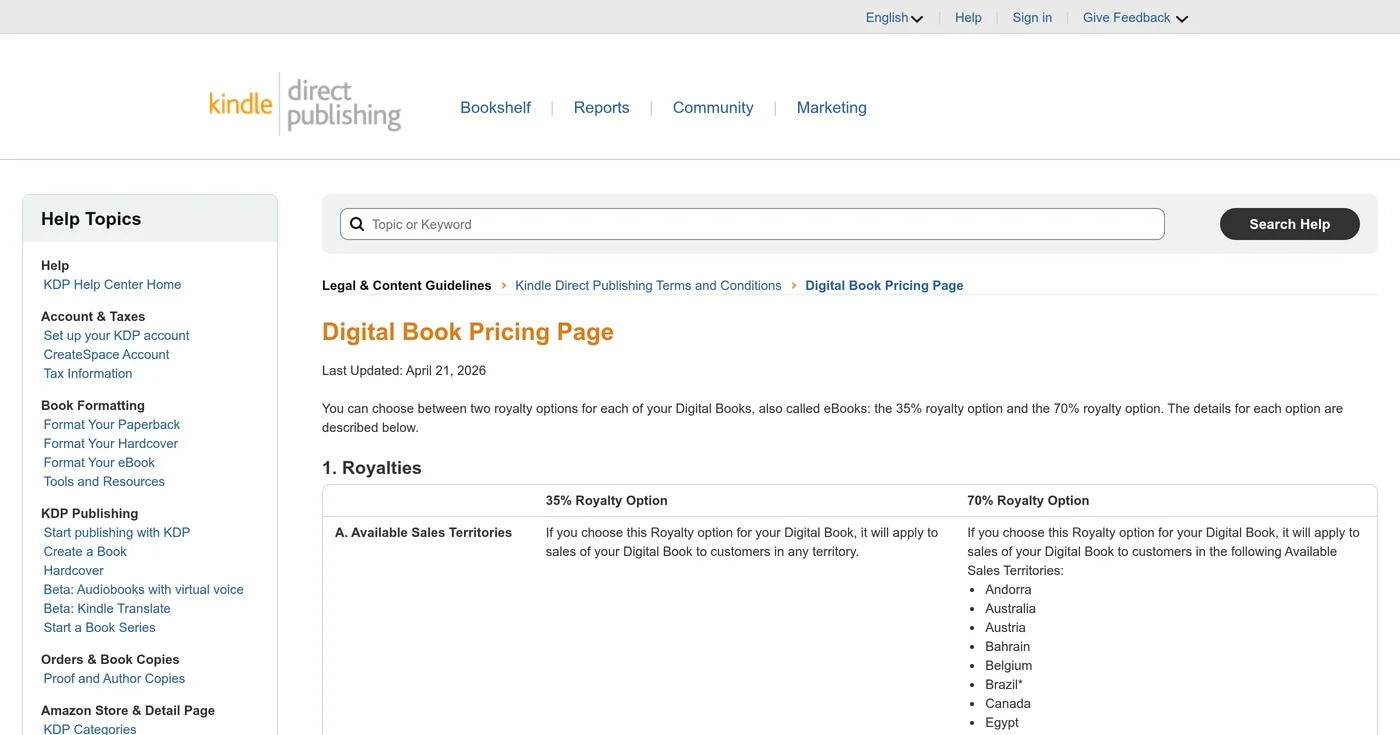
Amazon KDP royalties explained: the 35% vs 70% tier rules, the $12.99 ceiling change, delivery fees, paperback math, and Kindle Unlimited page-read rates.
Professional publishing supported by generous companies you should check out.


