


15 Grammar Mistakes That Quietly Undermine Your Writing
Spot and fix the 15 most common grammar mistakes in English writing, with incorrect/correct examples and memory tips.
Updated 17 min read


Spot and fix the 15 most common grammar mistakes in English writing, with incorrect/correct examples and memory tips.
The most common grammar mistakes in English writing include subject-verb agreement errors, comma splices, dangling modifiers, apostrophe misuse, and homophone confusion (your/you're, its/it's, their/there/they're). According to a Tidio survey, 97% of people say grammar mistakes influence their perceptions of companies and individuals. Below, you'll find all 15 mistakes explained with clear examples and fixes you can apply today.
Grammar errors don't just signal carelessness. A 2023 peer-reviewed study found that error-laden resumes produced an 18.5 percentage point lower interview probability, showing how writing quality shapes real-world outcomes. Understanding the most frequent errors is the fastest path to writing that earns trust.
In this guide, you'll explore the 15 most common grammar mistakes, why writers make them, and how to fix each one.
When reviewing your own writing for grammar errors, check four things:
Mistake | Rule | Incorrect | Correct |
|---|---|---|---|
Subject-verb agreement | Verb matches the main subject | The list of items are ready | The list of items is ready |
Comma splice | Can't join clauses with a comma alone | I studied, I passed | I studied, so I passed |
Sentence fragment | Must have subject + verb | Because I was tired. | I left early because I was tired. |
Run-on sentence | Separate independent clauses | She loves reading she does it daily | She loves reading. She does it daily. |
Misplaced modifier | Place near what it modifies | She almost drove every day | She drove almost every day |
Dangling modifier | Subject must appear in the sentence | Walking in, the rain started | As I walked in, the rain started |
Apostrophe error (its/it's) | its = possessive; it's = it is | The cat cleaned it's paws | The cat cleaned its paws |
Your vs. you're | your = possessive; you're = you are | Your going to love this | You're going to love this |
Their/there/they're | three distinct words | Their going to the party | They're going to the party |
Affect vs. effect | affect = verb; effect = noun | It had a negative affect | It had a negative effect |
Me vs. I | I = subject; me = object | She invited he and I | She invited him and me |
Verb tense shift | Stay consistent within a context | She walked in and is sitting | She walked in and sat down |
Fewer vs. less | fewer = countable; less = uncountable | Less students showed up | Fewer students showed up |
Passive voice overuse | Active voice is clearer | Mistakes were made by us | We made mistakes |
The rule: The verb must agree with the main subject of the sentence, not with any noun that sits between them.
This mistake often happens when a prepositional phrase or clause sits between the subject and verb, causing writers to match the verb to the nearest noun instead of the actual subject.
Incorrect: The list of items are on the table.
Correct: The list of items is on the table.
The subject is "list," which is singular. "Items" is the object of the preposition "of" and doesn't govern the verb. A quick check: mentally remove the phrase between commas or between the subject and verb, then ask whether the remaining subject is singular or plural.
Incorrect: The team of engineers have finished the project.
Correct: The team of engineers has finished the project.
Collective nouns (team, group, committee, audience) are usually treated as singular in American English. British English sometimes treats them as plural.
Quick tip: Identify your subject first, then match the verb. Mentally cross out any phrase between them. Singular subject (he/she/it) → singular verb; plural subject (they) → plural verb.
The rule: You cannot join two independent clauses with only a comma. Each independent clause contains a subject and a verb and expresses a complete thought.
Comma splices are among the most common sentence-level errors covered in depth by Purdue OWL. They slip through because the comma mimics the pause you'd naturally take when speaking.
Incorrect: I studied hard, I passed the exam.
Correct (option 1, period): I studied hard. I passed the exam.
Correct (option 2, semicolon): I studied hard; I passed the exam.
Correct (option 3, conjunction): I studied hard, so I passed the exam.
The fix depends on the relationship between the clauses. If the ideas are closely linked, a semicolon signals that connection. If one clause causes the other, a coordinating conjunction (for, and, nor, but, or, yet, so) makes the logic explicit.
Quick tip: Before a comma, ask: could the text on either side stand alone as a complete sentence? If yes, you need more than a comma.
The rule: Every sentence must have a subject, a verb, and express a complete thought. A fragment fails on at least one of these.
Fragments often start with subordinating conjunctions (because, although, when, since) or relative pronouns (which, who, that), creating dependent clauses that need to attach to an independent clause to make sense.
Incorrect: Because I was tired.
Correct: I left early because I was tired.
Incorrect: She ran to her room. And wept.
Correct: She ran to her room and wept.
Fragments aren't always wrong in creative writing. Skilled authors use them intentionally for rhythm or emphasis. But in professional and academic writing, they signal carelessness and should be avoided unless the fragment is clearly deliberate.
Quick tip: Read the sentence aloud in isolation. If it feels like a half-finished thought, it probably is. Attach it to the preceding sentence or add a subject and verb to complete it.
The rule: Two or more independent clauses must be separated by proper punctuation or a conjunction. Fusing them without either creates a run-on.
Run-on sentences differ from comma splices in that they typically have no punctuation between the clauses at all, or they use a conjunction without proper punctuation. Purdue OWL groups run-ons and comma splices as the same class of sentence-boundary error, with three parallel fixes: add a period, add a semicolon, or add a coordinating conjunction.
Incorrect: She loves coffee she drinks it every morning.
Correct: She loves coffee. She drinks it every morning.
Incorrect: The project was overdue we had to work through the weekend.
Correct: The project was overdue, so we had to work through the weekend.
Quick tip: If a sentence feels unusually long, look for the point where one complete thought ends and another begins. That junction needs either a period, a semicolon, or a coordinating conjunction with a comma.
The rule: A modifier (word or phrase that adds detail) must sit close to the thing it modifies. When it lands too far away, it creates confusion or unintended comedy.
Incorrect: She almost drove her kids to school every day.
Correct: She drove her kids to school almost every day.
In the incorrect version, "almost drove" implies she nearly drove but didn't. In the correct version, "almost every day" means she drove on most days. The difference is significant.
Incorrect: The professor only teaches graduate students on Thursdays.
Correct: The professor teaches only graduate students on Thursdays. (or: The professor teaches graduate students only on Thursdays.)
Quick tip: After writing a sentence with a modifier like "only," "almost," "just," "nearly," or "even," ask: what does this word actually apply to? Move it directly before that word.
The rule: When a modifier (often a participial phrase at the start of a sentence) implies a subject, that subject must be the grammatical subject of the main clause.
The UW-Madison Writing Center describes dangling modifiers as one of the twelve most common writing errors, particularly in academic and professional prose.
Incorrect: Walking to the store, the rain started.
Correct: As I walked to the store, the rain started.
In the incorrect version, "walking to the store" implies a person walking, but the main clause has "the rain" as its subject. The rain was not walking.
Incorrect: To improve your writing, grammar must be studied.
Correct: To improve your writing, you must study grammar.
Quick tip: When a sentence opens with a phrase ending in "-ing" or "to [verb]," check that the subject immediately after the comma is the entity doing that action.
The rule: Apostrophes serve three purposes: forming contractions, indicating possession for nouns, and rarely creating certain plurals (like dotting your i's). They do NOT make nouns plural and do NOT apply to possessive pronouns (its, yours, theirs, hers, ours, whose).
Purdue OWL identifies three common apostrophe failure modes:
Error 1 (Possessives of pronouns):
Incorrect: The dog wagged it's tail.
Correct: The dog wagged its tail.
Error 2 (Plurals, the grocery store apostrophe):
Incorrect: Three apple's for sale.
Correct: Three apples for sale.
Error 3 (Missing in contractions):
Incorrect: He couldnt remember why he'd come.
Correct: He couldn't remember why he'd come.
For possessive nouns: singular noun gets 's (the writer's voice), plural noun ending in -s gets apostrophe after (the writers' conference).
Quick tip: If you can substitute "it is" or "it has," use "it's." Otherwise, use "its." This single test catches the most common apostrophe error.
The rule: Your is a possessive pronoun indicating ownership. You're is a contraction of "you are."
This homophone pair appears on virtually every list of common grammar mistakes because the two words sound identical in speech, so the error slips through undetected until a reader spots it.
Incorrect: Your going to love this book.
Correct: You're going to love this book.
Incorrect: You're writing has improved significantly.
Correct: Your writing has improved significantly.
Quick tip: Replace the word with "you are." If the sentence still makes sense, use "you're." If it doesn't, use "your." "You are going to love this book" works, so "you're" is correct.
The rule: Its is the possessive form of "it." It's is a contraction of "it is" or "it has." The apostrophe signals omission, not possession, in this case.
This confusion is particularly common because the standard rule for possessives is to add 's, making "it's" feel intuitively right for possession. But "its" is a possessive pronoun (like his, hers, theirs) and those never take apostrophes.
Incorrect: The company lost it's reputation overnight.
Correct: The company lost its reputation overnight.
Incorrect: Its been three weeks since the deadline.
Correct: It's been three weeks since the deadline.
Quick tip: Substitute "it is" or "it has." If the sentence still works, use "it's." If it sounds wrong, use "its."
The rule: Three homophones, three distinct meanings. Their indicates possession by a group, there indicates a place or introduces a clause, and they're is a contraction of "they are."
Their: The authors revised their manuscripts. (Possession; it belongs to them)
There: The manuscript is over there. (Place)
There is: There is a problem with the draft. (Introductory)
They're: They're revising the manuscript now. (They are)
Incorrect: Their going to the conference next week.
Correct: They're going to the conference next week.
Incorrect: Put the books over they're.
Correct: Put the books over there.
Quick tip: For "they're," try substituting "they are." For "their," try substituting "our": if it still makes sense, "their" is right. If neither test works, use "there."
The rule: Affect is almost always a verb meaning to influence or change something. Effect is almost always a noun referring to a result or outcome.
Both words can occasionally function in less common roles, as Merriam-Webster details: effect as a verb meaning "to bring about," and affect as a psychological noun. Those usages are rare and context-specific.
Incorrect: The weather had a serious affect on attendance.
Correct: The weather had a serious effect on attendance.
Incorrect: The policy change will effect thousands of readers.
Correct: The policy change will affect thousands of readers.
Quick tip: Replace the word with "impact" (noun) or "influence" (verb). If "impact" fits, use "effect." If "influence" fits, use "affect." "The weather had a serious impact on attendance" means effect is correct.
The rule: "I" is a subject pronoun used when you're performing an action. "Me" is an object pronoun used when the action is being done to you. The error almost always appears in compound subjects or objects.
Incorrect: Please send the report to Sarah and I.
Correct: Please send the report to Sarah and me.
Incorrect: Me and Tom will review the draft.
Correct: Tom and I will review the draft.
This mistake often goes the other direction, too: writers who know that "me and Tom" sounds wrong overcorrect and use "I" everywhere, including in places where "me" is correct.
Quick tip: Remove the other person from the sentence. "Please send the report to I" sounds wrong, so use "me." "I will review the draft" sounds right, so "I" is correct.
The rule: When describing events in the same time frame, stay in one tense. Unintentional shifts between past and present within the same scene confuse readers about when things happened.
Wordvice identified verb form errors (including tense shifts) as one of the five most common grammatical problems in analyzed client writing.
Incorrect: She walked into the room and is sitting down in the front row.
Correct: She walked into the room and sat down in the front row.
Incorrect: The author establishes the setting quickly, then the protagonist walked through the door.
Correct: The author establishes the setting quickly, then the protagonist walks through the door.
Intentional tense shifts are acceptable when you're moving between a historical narrative (past) and analytical commentary (present tense), a common convention in literary analysis. The error is unintentional shifting within the same scene.
Quick tip: Before editing for tense, decide the governing tense for each section: past for historical narrative, present for literary analysis. Then scan for verbs that deviate.
The rule: Use "fewer" with countable nouns (things you can count individually). Use "less" with uncountable or mass nouns (things measured in amounts).
This distinction is more frequently violated in spoken English, but it matters in writing, particularly in professional contexts where precision signals credibility.
Incorrect: There are less students enrolled this semester.
Correct: There are fewer students enrolled this semester.
Incorrect: You should drink fewer water before bed.
Correct: You should drink less water before bed.
The classic example is supermarket express lanes: "15 items or less" technically should be "15 items or fewer," though this usage is so common that most style guides now consider it acceptable informally.
Quick tip: Ask whether you could attach a number to the noun. "Fifteen students" is countable, so use fewer. "Some water" is not countable by units, so use less.
The rule: Passive voice is not grammatically wrong, but it makes writing weaker, wordier, and harder to follow when overused. Active voice names who is doing what, directly and efficiently.
Merriam-Webster describes passive voice as "sometimes criticized for being evasive." Reserve it for cases where the agent is unknown or where the emphasis belongs on the object, not the actor.
Passive: The report was reviewed by the committee.
Active: The committee reviewed the report.
Passive: Mistakes were made during the editing process.
Active: The editing team made mistakes during the process.
Passive voice is genuinely useful when the agent is unknown ("The manuscript was stolen"), irrelevant ("The data was collected in 2023"), or when you deliberately want to soften accountability. The problem is habitual, reflexive passive voice applied to sentences that would be clearer in active form.
Quick tip: Search for "was" and "were" as your first indicators of passive voice. When you find "[was/were] + past participle," ask whether naming the agent would make the sentence clearer and switch to active voice if so.
Fixing grammar mistakes is a skill built through awareness and practice, not just memorization of rules. Four strategies work consistently:
The 15 grammar mistakes covered here account for the majority of errors that undermine professional writing. Most of them come down to three habits: reading your own text too quickly to catch sentence-level problems, relying on phonetics when selecting homophones, and defaulting to passive constructions out of formality. A targeted editing pass that addresses your personal error patterns, supported by a grammar tool for mechanical checks, will catch most of these before readers see them.
If you're working on improving your writing systematically, start with the mistakes you make most often. Grammar isn't about memorizing every rule; it's about building the awareness to notice when something is off.

Gray is American English; grey is British and Commonwealth. Same color, same sound. Freeze titles, match your variety, then use the locked-name table.

Get paid to read books only when you deliver a review, critique, QC pass, or narration hour. Seven gigs, first-party rates, Foreword $55 and Booklist $15.
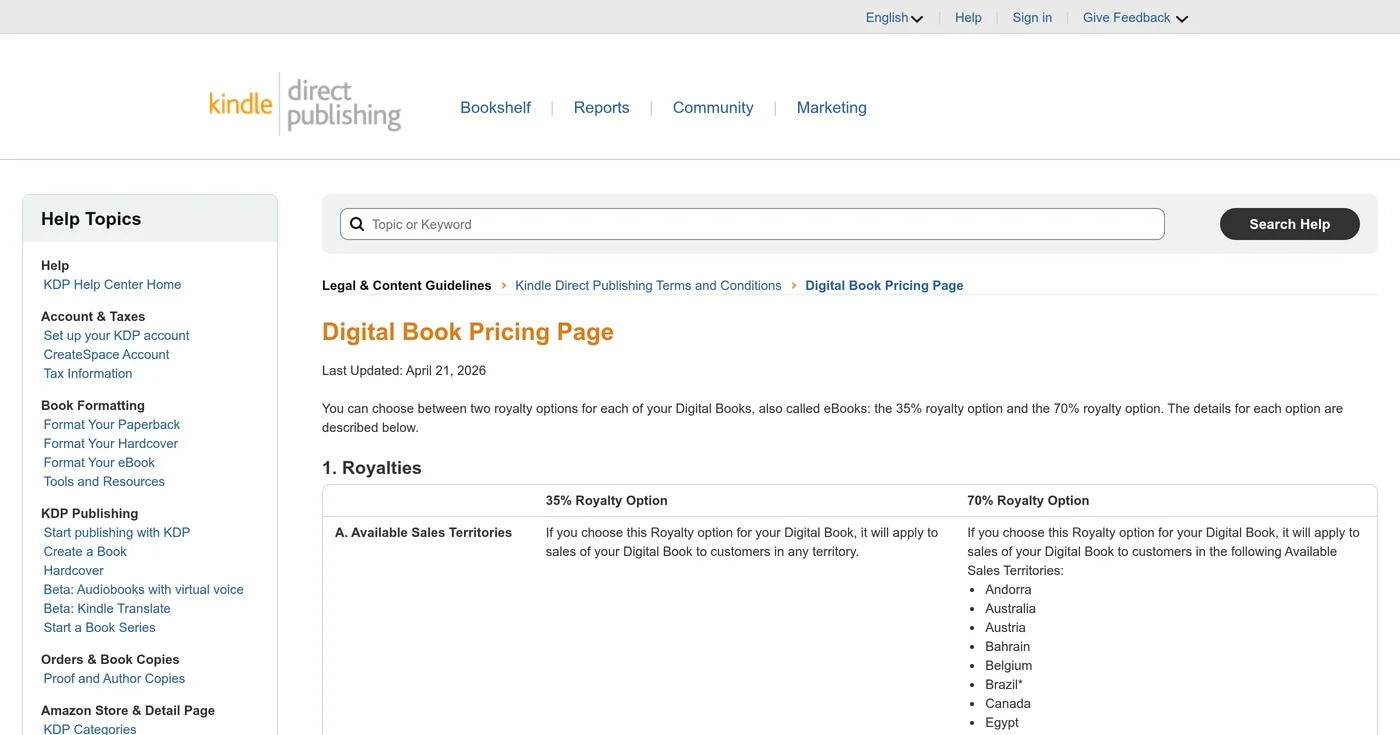
Amazon KDP royalties explained: the 35% vs 70% tier rules, the $12.99 ceiling change, delivery fees, paperback math, and Kindle Unlimited page-read rates.
Professional publishing supported by generous companies you should check out.


