


Make Money Writing: The Complete Guide for 2026
A comprehensive guide to 9 proven paths for making money as a writer, with real salary data, platform comparisons, and the most common mistakes to avoid.
Updated 14 min read


A comprehensive guide to 9 proven paths for making money as a writer, with real salary data, platform comparisons, and the most common mistakes to avoid.
Writing pays, but how much depends entirely on which path you take. Freelance content writers average $48,412 per year, while technical writers hit a $91,670 median salary according to the U.S. Bureau of Labor Statistics. At the other extreme, 45 Substack publishers now earn more than $1 million annually in subscription revenue.
The difference isn't talent. It's which income model you choose, which niche you specialize in, and how many streams you stack.
This guide maps every viable path to making money as a writer in 2026, from accessible entry points like freelance gigs to premium markets like ghostwriting books. You'll find honest income data, platform comparisons, and the mistakes that keep most writers underpaid.
Making money writing means converting your writing skills into income, whether through selling services (freelance work, copywriting), building assets (a blog, newsletter, or book catalogue), or participating in platforms that pay for content.
The fundamental choice is between trading time for money (service-based writing) and building assets that generate income over time (books, newsletters, blogs). Most successful writers combine both.
84% of companies outsource their content, according to a survey of 530 freelance writers. That demand isn't shrinking. The global digital content creation market is projected to reach $69.80 billion by 2030 at a 13.9% annual growth rate.
AI has changed how writing is produced but not eliminated the demand for it. In fact, 61% of writers reported using AI to support their work in 2025, primarily for research and brainstorming, while only 7% used it to generate actual content. Quality human writing remains a premium product.
Writers who earn well typically operate in one of three models, or a combination:
You sell your time and expertise directly to clients. Income is predictable but capped by hours. This includes freelance writing, copywriting, technical writing, and ghostwriting.
You build something that generates income beyond the initial work. A book, newsletter, or blog can earn for years after you write it. Income is variable and often slow to start, but has no ceiling.
You write for platforms that pay per view, per word, or per subscriber. Medium's Partner Program, Substack, and AI training data platforms fall here. Income is tied to platform rules and algorithms.
The highest earners combine all three. A technical writer (Model 1) who writes a niche newsletter (Model 2) and contributes to AI training platforms (Model 3) has income that doesn't stop when one client relationship ends.
Freelance writing is where most writers start, and for good reason: barriers to entry are low, clients are available across every industry, and 55% of freelance writers use it as their primary income source. You don't need a degree or an agent. You need samples, a niche, and the willingness to pitch.
Income varies significantly by niche, experience, and pricing model.
A survey of 346 freelance writers found that 65.9% earn $5,000 or less per month, while 15.7% earn over $10,000 per month. For U.S.-based writers, 20.6% hit that $10,000/month threshold.
52% of freelance writers reported earning the same or more in 2025 compared to 2024, even amid AI concerns.
Two assignments at $500 each get you there. That threshold is realistic for a writer who picks a niche, builds a small portfolio, and actively pitches clients.
The same survey found that fixed-rate pricing (used by 53.3% of writers) produces higher incomes than per-word or hourly pricing. Charge per project, not per word, as soon as you have enough experience to estimate your time accurately.
According to Elna Cain's 2024 survey of 530 writers:
Technical writing ranks close fourth. Forbes identifies white paper writing, case study writing, and sales page copywriting as the freelance writing categories most likely to produce $10,000+ individual projects.
Copywriting is the most financially leveraged form of writing because it's measured against revenue it generates, not hours it takes.
Content writing informs and educates: blog posts, articles, guides. Copywriting persuades and converts: sales pages, email sequences, ads. The distinction matters because copywriting commands significantly higher rates.
In-house copywriters at companies earn $55,000–$90,000 annually. Freelance copywriters who specialize in high-converting sales copy can exceed that significantly.
The standard path is to learn frameworks (AIDA, PAS, Before-After-Bridge), study proven sales letters, and start by offering to rewrite underperforming copy for small businesses.
AWAI offers training specifically structured around copywriting as a career. Learning to write a strong email sequence or landing page is more financially valuable, per hour, than learning to write a better blog post.
Start with direct response: short-form ads, email subject lines, product descriptions. These are fast to produce and easy to measure. Once you can point to a conversion rate improvement, you can justify higher rates and attract clients with larger budgets.
The most lucrative copywriting specializations include B2B demand generation, email marketing sequences, and direct-to-consumer sales pages for eCommerce or info products.
Technical writing is the most overlooked income path in "make money writing" discussions, yet it has the highest salary floor of any writing specialty.
The U.S. BLS reports a median annual wage of $91,670 for technical writers as of May 2024. The top 25% earn over $102,740; the bottom 25% earn $68,640.
ZipRecruiter's current average sits at $81,001/year, while Glassdoor shows $102,463; the variation reflects geographic and industry differences.
Technical writers translate complex information into clear documentation: user manuals, API guides, how-to articles, technical reports. They work primarily in software, engineering, and healthcare.
The BLS projects 1% employment growth from 2024 to 2034, with around 4,500 openings per year, mostly replacing writers who retire or change fields. The market is stable, not exploding.
You need a bachelor's degree and domain expertise. The fastest path: combine writing skills with knowledge in a technical field you already have (software development, engineering, medicine). Many technical writers come from those fields rather than journalism or English degrees.
Ghostwriting (writing content attributed to someone else) is one of the highest-paying writing specialties, and one of the least talked about publicly by nature.
Clients pay a premium for discretion and speed. An executive who wants a business book but lacks time to write will pay $50,000–$150,000 to have it written well.
The 2025 Ghostwriting Industry Report notes that demand for human ghostwriters actually increased as AI-generated content proliferated, because publishers, agents, and readers pushed back on low-quality AI output.
AI-generated writing cannot receive copyright protection, which is a concrete reason clients continue to pay for human ghostwriters.
The most reliable entry point is content ghostwriting: writing LinkedIn posts, blog articles, or newsletter issues for executives and founders under their name.
These projects are smaller ($150–$800 per article), easier to sell, and build the trust needed to pitch larger book projects.
Build a portfolio of "samples in a voice not your own." Ghostwriters rarely show their work publicly, but you can write a sample executive LinkedIn post or a business article to demonstrate you can adapt to another person's voice and perspective. Most book-length ghostwriting relationships start with shorter content work and expand from there.
Self-publishing offers the most direct path from writer to business owner. The income distribution, however, is honest and humbling.
Based on Books.by's analysis of 12,000+ published books combined with the 2024 Written Word Media survey of 6,000+ authors:
Annual Income | Percentage of Authors |
|---|---|
$0 | 10–15% |
$1–$999 | 35–40% |
$1,000–$9,999 | 20–25% |
$10,000–$49,999 | 10–15% |
$50,000–$99,999 | 3–5% |
$100,000+ | 1–2% |
Authors who publish actively (3+ books, consistent marketing) shift that curve dramatically. Their median lands at $12,000–$15,000/year. The difference is strategy, not just talent.
46% of self-published authors earn $100 or less per month. The average book sells fewer than 500 copies in its lifetime, according to Nielsen BookScan. Traditional publishing is even harsher: the Authors Guild 2023 survey reports a total median earnings of $20,000/year for full-time authors (books plus all author-related activities)
83% of indie authors use Amazon as their primary platform. Amazon KDP offers 35% or 70% royalties on ebooks depending on pricing and territory, a structure that exceeds traditional publishing royalties (typically 7–15%) on a per-sale basis.
Kindle Unlimited generates $60M+ per month in author payouts across the platform.
The authors who earn well share a pattern: they publish in a specific genre, build a catalog of at least three books, and treat email list building as a core activity alongside writing.
Genre readers are loyal and consistent. A romance reader who finishes book one looks for book two immediately. That behavior creates compounding income that a standalone book rarely achieves.
The self-publishing path requires investment: professional cover design ($300–$1,000), editing ($500–$3,000 for a full manuscript), and a marketing budget.
Treating it as a business from the start (with a budget, a release schedule, and a list) is what separates authors who earn from those who don't.
Newsletters and blogs represent the ownership end of writer income: you build an audience you control rather than publishing on someone else's platform.
45 Substack publishers earn over $1 million annually in subscription revenue. That's an inspiring number with important context: it represents a tiny fraction of active newsletters, and Substack takes 10% of paid subscription revenue.
A more representative benchmark: one newsletter grew from zero to 4,000 subscribers (700 paid) and $40,000 annualized in 12 months. That's achievable but requires consistent publishing, active audience-building, and a clear paid value proposition.
Only about 4% of Substackers earn $1,000+/month, according to community surveys. Most newsletters in their first year earn under $500/month.
Blogs earn through affiliate marketing, display ads (Google AdSense), sponsorships, digital products, and courses. The general rule: meaningful affiliate income starts at around 100 organic clicks per day. Below that threshold, revenue is negligible.
A blog is a long-term asset. Most monetizable blogs take 12–24 months to reach meaningful traffic. The writers who succeed treat it like a publishing business, not a side project.
AI companies need human writers to create training data, evaluate outputs, and improve model quality. This has created a category of writing work that didn't exist five years ago.
Pay scales with domain expertise. A writer with medical, legal, or engineering knowledge can command significantly higher rates than a generalist.
This income path works well as a complement to other writing work because it's flexible, remote, and doesn't require building a client relationship or audience.
Beyond the categories above, a number of publications pay writers directly per article.
Platform | Rate | Best For |
|---|---|---|
$300–$1,000/post | Conversion copywriting | |
$200–$500/story | Personal essays, narrative journalism | |
$200–$500/piece | Opinion, analysis | |
$200–$400/post | Business, finance | |
$100/list | Any topic | |
$100–$200/article | Environment | |
Varies | Expat lifestyle, travel |
Make a Living Writing maintains a broader list of 25+ publications paying $100–$200+ per article.
The Medium Partner Program pays based on read time from paying members. Earnings declined in 2024–2025 as algorithmic changes made viral reach harder. A 2025 update allocated 5% of the payout pool to external traffic rewards, making it more viable for writers who already have an audience driving readers to their articles.
Tool | Best For | Cost |
|---|---|---|
Finding freelance clients, verified payment | Free to join; 10–20% service fee | |
Selling writing packages to buyers | Free to join; 20% service fee | |
Paid newsletters | Free; 10% of paid subscription revenue | |
Self-publishing ebooks and print books | Free; 35% or 70% royalties | |
Connecting authors with professional editors and designers | Free for authors | |
Freelance writing job listings | Free to browse | |
Curated freelance writing opportunities | Paid membership |
Per-word pricing caps your income to output volume. Fixed-rate project pricing rewards research, strategy, and quality. 53.3% of writers already use fixed rates, and they consistently report higher income than per-word writers.
Relying entirely on book royalties, a single freelance client, or one platform puts your income at the mercy of one decision maker. A client who leaves, a platform that changes its algorithm, or a book that stops selling erases the income. Build at least two streams before you need them.
Generalist writers earn less across every category. A writer who covers "anything" competes with every other writer. A writer who covers fintech for B2B SaaS companies can charge rates that generalists can't justify. Pick a niche and build evidence of expertise in it.
Most "make money writing" discussions focus on creative or content writing. Technical writing has a $91,670 median salary with consistent demand. If you have domain knowledge in software, engineering, or healthcare, this is the highest-floor option available.
A newsletter on Substack is better than no newsletter. But Substack controls the platform, sets the fees, and can change the rules. The writers who treat platform income as a bridge to building their own email list and website own something more durable.
Making money writing comes down to three variables: which model you choose (service, asset, or platform), how deeply you specialize, and how many income streams you build.
Start with one path that matches your current skills and available time. Freelance writing is the fastest entry point. Technical writing is the best option if you have existing domain expertise. Ghostwriting pays the most per project once you have a track record.
The next step is specific: pick a niche, produce three writing samples in that niche, and send five pitches this week to publications or companies that hire writers in that space. Income follows evidence of specialization more reliably than anything else.

Gray is American English; grey is British and Commonwealth. Same color, same sound. Freeze titles, match your variety, then use the locked-name table.

Get paid to read books only when you deliver a review, critique, QC pass, or narration hour. Seven gigs, first-party rates, Foreword $55 and Booklist $15.
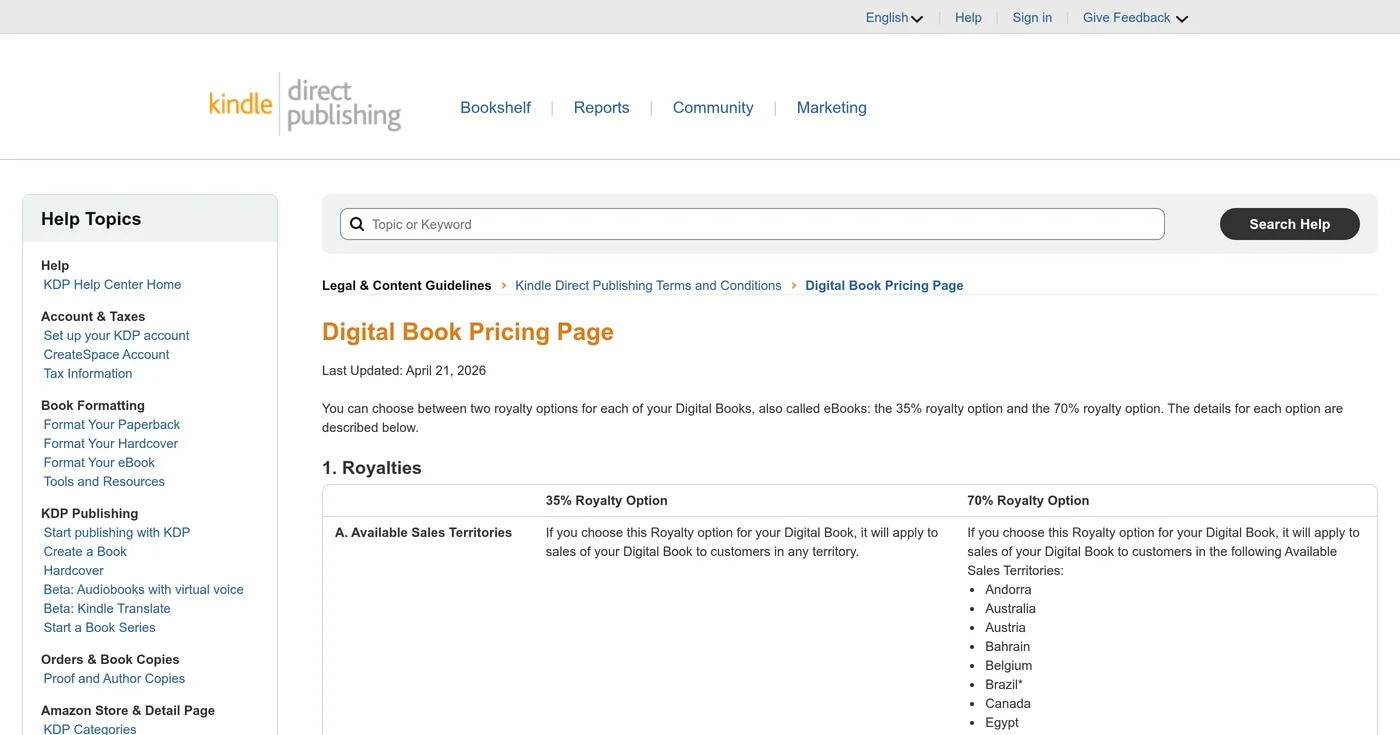
Amazon KDP royalties explained: the 35% vs 70% tier rules, the $12.99 ceiling change, delivery fees, paperback math, and Kindle Unlimited page-read rates.
Professional publishing supported by generous companies you should check out.


