


7 Legitimate Ways to Get Paid to Read Books
Get paid to read books only when you deliver a review, critique, QC pass, or narration hour. Seven gigs, first-party rates, Foreword $55 and Booklist $15.
Updated 12 min read


Get paid to read books only when you deliver a review, critique, QC pass, or narration hour. Seven gigs, first-party rates, Foreword $55 and Booklist $15.
You get paid to read books when you deliver a review, a manuscript critique, a proof-listen, or a finished narration hour. Foreword Reviews pays $55 per assignment. Paid beta work and audiobook QC pay for notes and technical passes, not for finishing a novel on the couch.
Amazon, NetGalley, and reading apps do not write that check. A $15 Booklist review of a full novel is still a few dollars an hour.
If you already write for money or track author income, treat these as publishing gigs with a reading step.
Beta, audiobook QC, trade reviews, and narration prep first. Then specialized manuscript work, then one entry-level cash club with caveats. Search popularity does not rank this list.
Gig | Best For | Typical Pay | Barrier | Who Funds |
|---|---|---|---|---|
Unpublished manuscripts | Posted gigs $40-$50/ms; reader take-home often unpublished | Sample letter; off-forum hiring | Author | |
Script-accurate proof-listens | ZipRecruiter avg $27.65/hr; no ACX rate card | DAW skills; two-pass QC | Studio or narrator | |
Library and trade coverage | Samples; RA experience | Magazine | ||
Author-funded review products | Live pages often omit dollars; author fees from $179 | Samples; Discovery wants 3+ years | Author | |
Booth work plus a script read | Voices $200-$300 PFH | Home studio; retail-ready audio | Rights holder | |
Identity-specific letters | Inqueery $0.025/word; others from $0.008/word | Lived expertise plus editorial letter | Author | |
Entry-level cash reviews | First unpaid, then $5-$60 | Unpaid first review | Club |
Seven paid-reading gigs by pay, barrier, and who funds the check
Best for structural notes on unpublished manuscripts
Authors hire paid beta readers for plot, pacing, character notes, and where the reader bounced. A 250-word consumer review is a different product.
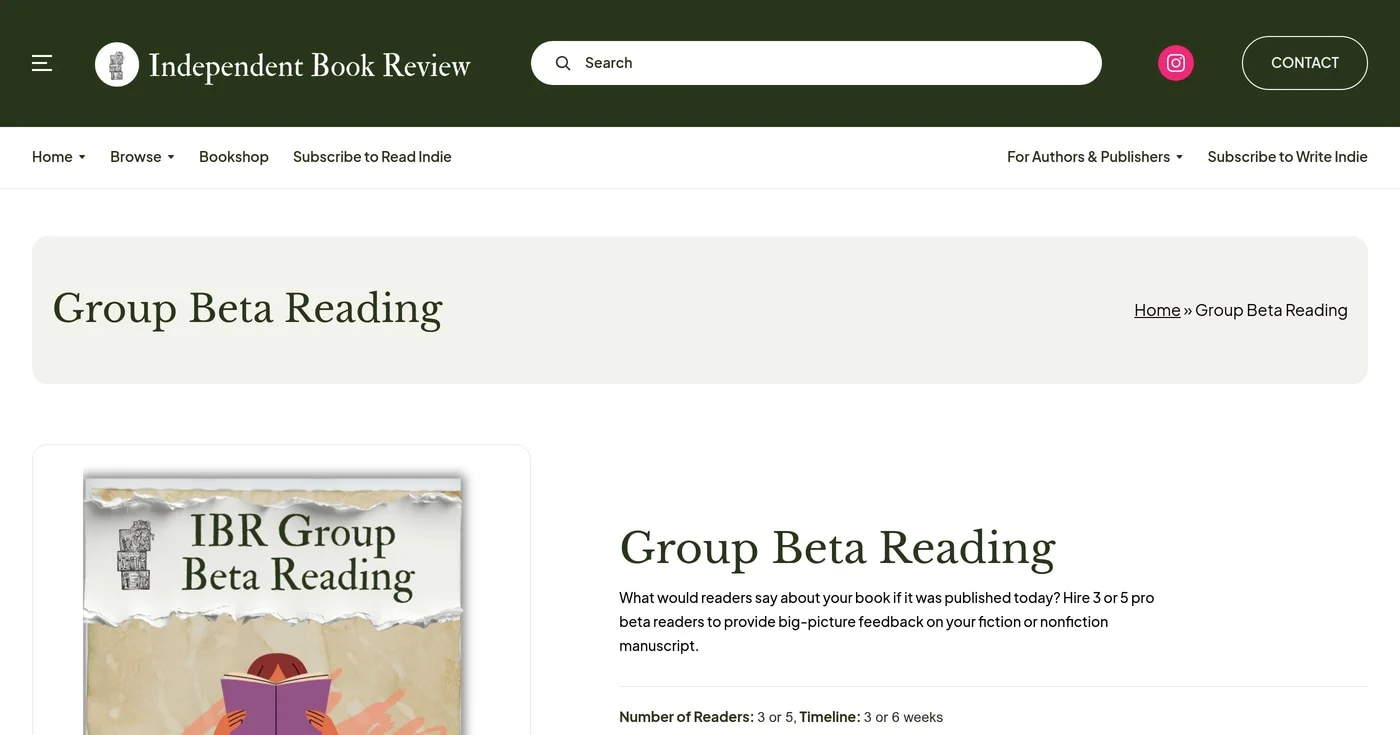
Authors buy the work. The Spun Yarn sells three matched readers and a 30+ page report in 30 days. Independent Book Review sells group beta at $429-$929 for three or five readers.
Those prices are author fees. Reader take-home is unpublished on both sites. Upwork romance gigs posted in September 2026 included $40 and $50 per manuscript.
HMD puts a professional Reedsy beta at $300-$600 for a 90,000-word novel and treats cheap Fiverr gigs ($25-$50) as AI-contaminated. On r/selfpublish, authors treat cheap Fiverr beta as an AI-report minefield.
Paid work happens off volunteer swap boards: Reedsy, IBR, Spun Yarn, or a direct author contract. Tish Stephens started charging after volunteer betas ghosted her as an author.
Author fees are not your invoice. Price the letter.
Best for technical listeners who match audio to script
Two passes. First you edit for noise, breaths, plosives, and pacing. Then you QC so every word matches the manuscript, plus names, accents, and character-voice continuity.
Audible Studios describes that workflow on ACX. Script lock is the product.
ACX submission rules still want 44.1 kHz files with peaks under -3 dB. On r/ACX, proofers treat the job as script lock. Plot notes are unpaid extra.
ACX and Audible do not publish a first-party proofer rate card. ZipRecruiter listed an average of $27.65/hr as of 17 July 2026, with most cards at $20.43-$33.65. Treat that as a mixed board average, not BLS.
Production math is clearer on the narrator side. ACX budgets roughly $200 PFH for post-production (edit, QC, mix, master) on top of narration.
Head results still point at review clubs. QC is production labor Google does not rank.
Ask the studio whether you are editing, QCing, or both. Invoice that scope.
Best for credentialed reviewers who can write house style
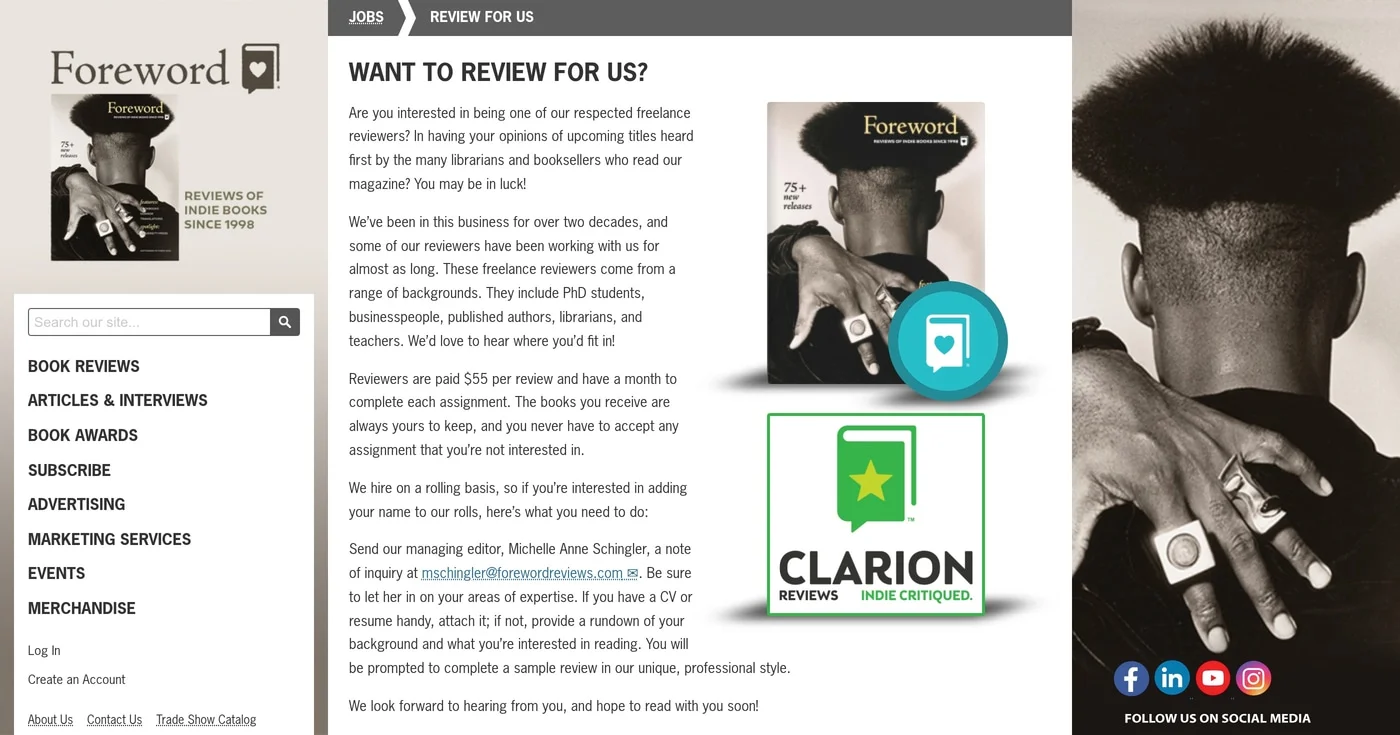
These are magazines that pay contractors. Screenshot the apply page before you believe a roundup.
Foreword Reviews is the cleanest first-party card. Reviewers are paid $55 per review, have a month, keep the book, and may decline. Email Michelle Anne Schingler at mschingler@forewordreviews.com.
Booklist (ALA) pays $15 when the review is published and $5 if it is rejected. Length is 150-175 words, recommendation-only, with readalikes. Typical load is 2-3 reviews a month, so $30-$45 if they all run.
Publishers Weekly does not publish a freelancer rate on PW.org. As of 24 March 2025, PW charges publishers $25 per title for review consideration.
Kirkus hires Indie contractors through David Rapp at Drapp@kirkus.com. Traditional trade reviews and Kirkus Indie are different products. Indie is author-funded, and reviewer pay is omitted on the careers page.
Apply with clips that already look like the column. A blog rant is the wrong sample.
Best for reviewers willing to work author-funded desks
Beer-money lists flatten this bucket into "sites that pay." The author buys a product. You may still get a check.
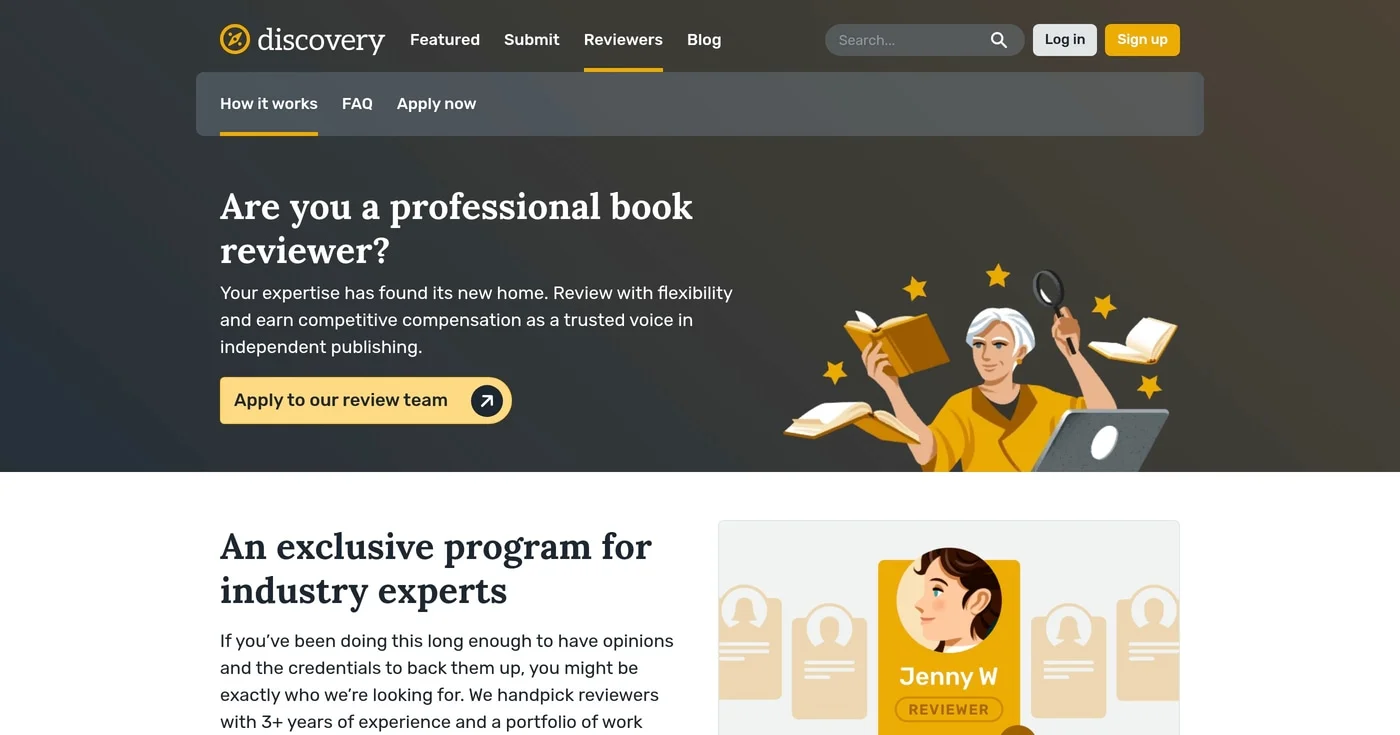
Reedsy Discovery promises pay for every book you review and lists no dollars. The apply form wants 3+ years in literary publications, 3-6 published reviews, and a 350-character bio.
Authors see a different number: $299 to get an industry writer. Until Discovery prints a reviewer rate, do not treat blog tables as live pay.
Independent Book Review confirms it pays reviewers and does not publish the amount. Author-side products start from $179, with 400-750 words in 1-5 weeks. Send a writing sample.
US Review pays by the 5th and omits the dollar figure. You need a resume, samples, and two professional references.
BookBrowse offers a byline and "modest payment" for about one review a month. BookLife Reviews is a PW author product at $399 ($499 above 100,000 words), not a job board.
If a site will not print the fee, ask first.
Best for voice talent who already work in a booth
Read the script, mark the names, then perform. The invoice is per finished hour, not per hour in the chair.
Voices.com (April 2025) puts audiobooks generally at $200-$300 PFH. ACX Money Talks says $300-$400 PFH once you count booth time plus 2-3 edit hours.
Narrators Roadmap sets a $200 PFH floor for punch-recorded audio and $250-$300 for retail-ready files. $75 PFH is not a real rate.
ACX estimates about 9,300 words per finished hour. An 80,000-word novel is about 8.6 finished hours. At $300-$400 PFH that is $2,580-$3,440 for the whole title.
PFH on ACX is due when the rights holder approves the final audio. ACX does not pay the PFH; the rights holder does. Royalty share is paid by Audible on sales.
Listener catalogs live in a separate audiobook subscriptions roundup.
Quote PFH. Do not call booth work leisure reading.
Best for identity-specific manuscript letters
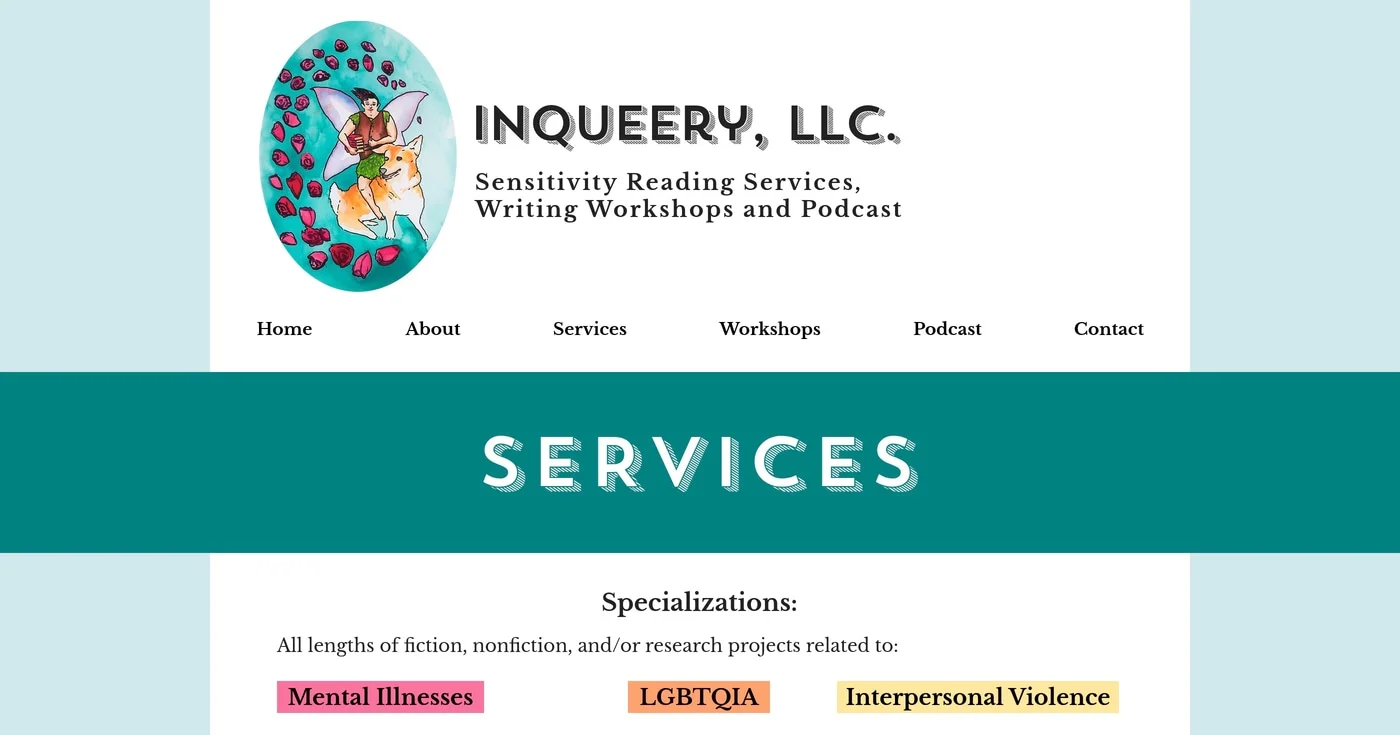
You are hired for a named expertise and a written report. CipherWrite treats sensitivity reading as a different job from beta reading.
Named first-party cards exist, which is rare in this cluster. Inqueery charges $0.025/word (about $10/page), $50 minimum.
A 70,000-word manuscript is about $1,750. The desk covers trauma, LGBTQ, and IPV.
Arien Reed lists $0.01/word with a $150 minimum for cultural-competency reads. BoricuaReads lists $0.008/word above 10,000 words, with picture books at $75 or $100 with editorial notes.
Those rates are identity plus a letter. If you cannot name the expertise, this is the wrong card.
Publish the expertise on the rate page. Vague "sensitivity available" is how this work gets underpriced.
Best for entry-level cash, with eyes open
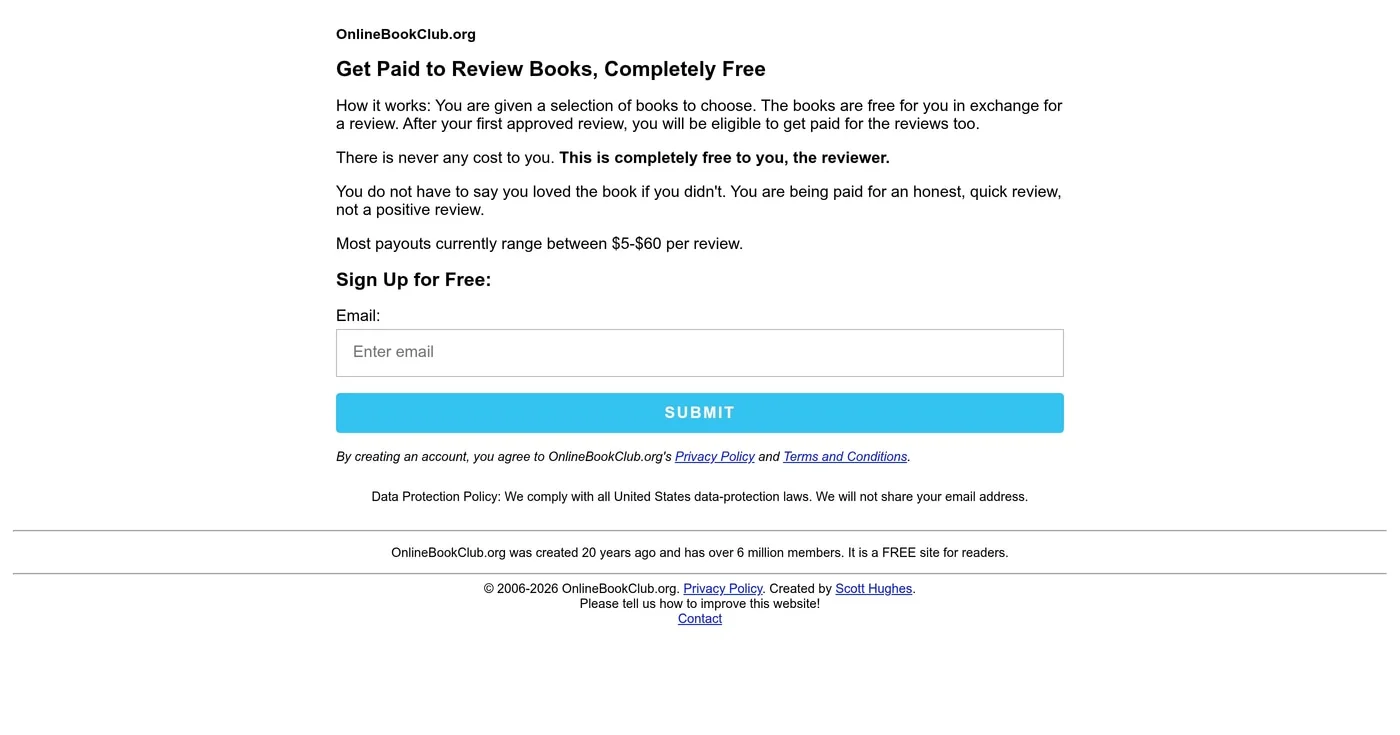
Online Book Club is a visible entry-level cash product, and it should never be pick #1. First review is unpaid (book only). After that, reviews pay $5-$60.
The site says it wants honest reviews, including negative ones. It also calls itself not a get-rich-quick scheme.
Scott Hughes founded the club in 2006. The public claim is two decades and millions of members. Staff headcounts you see on data scrapers are not first-party.
Reputation is mixed. The first-party page is enough to say they pay after a gate. It is not enough to call this a career.
Use it as a portfolio starter if you need published reviews before Foreword or Booklist will look at you. Unlike BookSirens, which pays in books, this club prints dollars after a gate.
Cap your hours. A $5 review of a full book is still a few dollars an hour.
Start with published reviews, even self-hosted. Then apply to desks that print a process.
Lead with Foreword, Booklist, and Kirkus.
Add Discovery, IBR, and US Review if you want author-funded desks. BookBrowse is the modest-pay option.
No-experience paths are unpaid ARCs for access, or OBC-style entry cash with the unpaid-first-review gate in mind. BookSirens is a common result for this query and pays in books, not dollars.
On r/RomanceBooks, ARC reviewing shows up as spreadsheet labor with 4-star politics. You get the book. You do not get a wage.
Pick the gig by the deliverable you can already produce. Clean 175-word recs match Booklist. A 650-word letter matches beta or IBR.
Same test you use for content rates: price the artifact, not the hours spent reading.
Author-funded review products are the growth path, not magazine mastheads. Discovery's live author fee is $299. BookLife sells $399 packages ($499 above 100,000 words).
Kirkus Indie remains an author product with a contractor on the other side.
Reviewer dollars are moving off the apply page. Foreword and Booklist still print fees. Discovery, IBR, US Review, BookBrowse, and BookLife do not.
Marketplace beta is splitting in public. HMD warns that cheap Fiverr reports can be AI-generated. Reedsy and group-beta products still sell a human letter.

Gray is American English; grey is British and Commonwealth. Same color, same sound. Freeze titles, match your variety, then use the locked-name table.
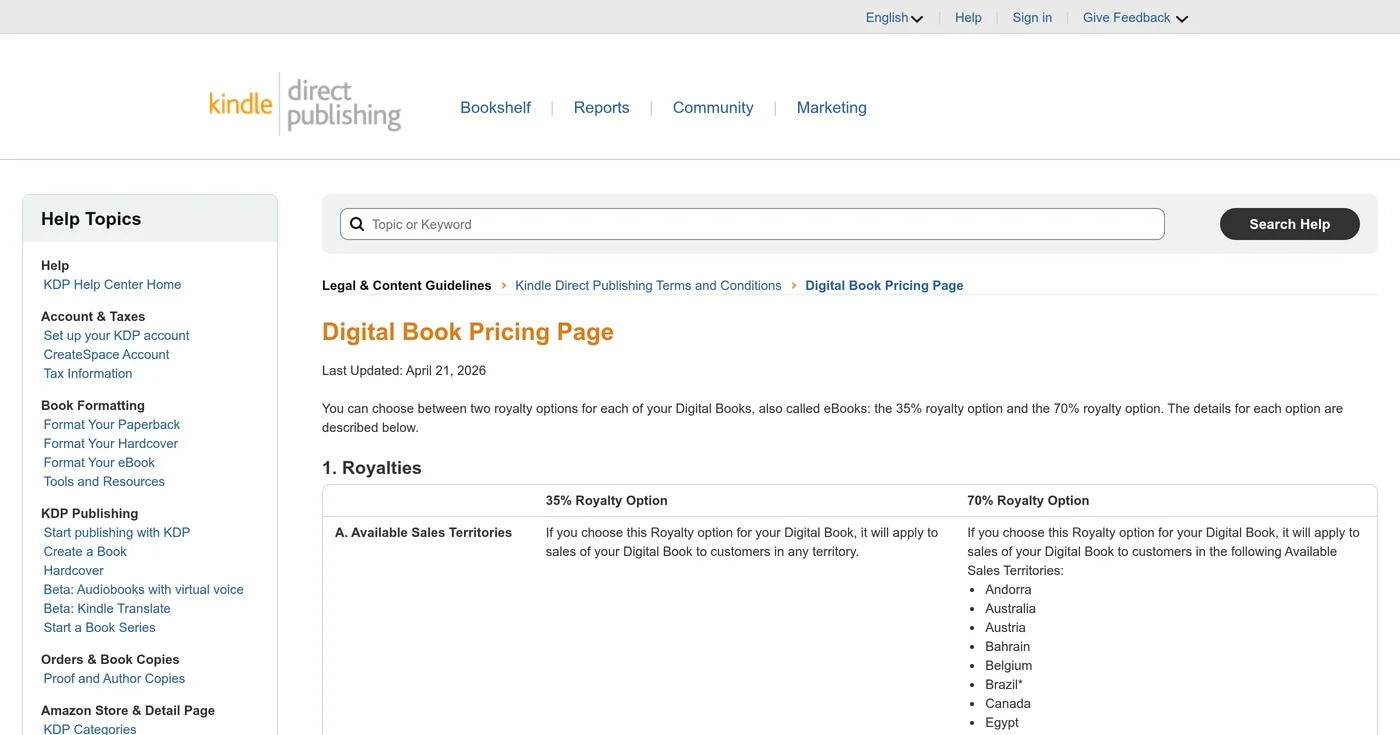
Amazon KDP royalties explained: the 35% vs 70% tier rules, the $12.99 ceiling change, delivery fees, paperback math, and Kindle Unlimited page-read rates.

Hybrid publishing: pay for production, keep your rights, earn 40–90% royalties. How to evaluate publishers and spot vanity presses.
Professional publishing supported by generous companies you should check out.


