
11 Audiobook Subscriptions That Pass the Cancellation Test
Compare the 11 best audiobook subscriptions of 2026, ranked by catalog depth, ownership terms, and value per listen.
Updated 20 min read

Compare the 11 best audiobook subscriptions of 2026, ranked by catalog depth, ownership terms, and value per listen.
The best audiobook subscriptions in 2026 depend on one question: do you want to own your library after you cancel? Audible Premium Plus leads on catalog depth and exclusives. Libro.fm is the only major service delivering DRM-free MP3 files you permanently own, and Spotify Audiobooks makes sense only if you already pay for Premium.
The US audiobook market reached $2.22 billion in 2024, growing 13% year over year. The landscape changed materially in 2026: Everand abandoned its "Netflix of audiobooks" unlimited model and Audible launched its cheapest plan ever. Free library apps like Libby now pull 90,500 monthly searches (190 times the volume of "best audiobook subscriptions").
Ordered by overall listener value: catalog depth, ownership terms, and cost per title for a typical 1-2 book/month listener.
Software | Best For | Key Features | Pricing | Free Plan | Platforms |
|---|---|---|---|---|---|
Catalog + exclusives | 500K+ titles, Originals, narrator search | Yes (30-day trial) | iOS, Android, Web, Alexa | ||
DRM-free ownership | MP3 files you own, B Corp, indie bookstore share | Yes (1 free credit) | iOS, Android, Web | ||
Existing Premium users | 700K+ titles, 15 hrs/mo bundled with Premium | No (included with Premium) | iOS, Android, Web, Desktop | ||
Budget ownership | 150K+ titles, credits roll over | Yes (30-day trial) | iOS, Android, Web, Kobo devices | ||
Free via library | 45K+ libraries, OverDrive catalog | Free | Yes (always free) | iOS, Android, Web | |
Instant free access | No holds, multi-format (books, comics, movies) | Free | Yes (always free) | iOS, Android, Web, Roku | |
Multi-format bundle | 1.5M+ titles (all formats), Fable book clubs | Yes (7-day trial) | iOS, Android, Web | ||
Deal hunters | Daily deals 85-95% off, permanent ownership | Free + $0.99–$5.99/title | Yes (free to join) | iOS, Android, Web | |
Volume per dollar | 1 credit + 2 VIP borrows/month | Yes (30-day trial) | iOS, Android, Web | ||
DRM-free budget | DRM-free files, 75K+ titles, rental option | No | iOS, Android, Web | ||
Nonfiction summaries | 6,500+ book summaries, 15 min each | Yes (7-day trial) | iOS, Android, Web |
Best audiobook subscriptions compared at a glance
Best for writers who want the deepest catalog and exclusive content
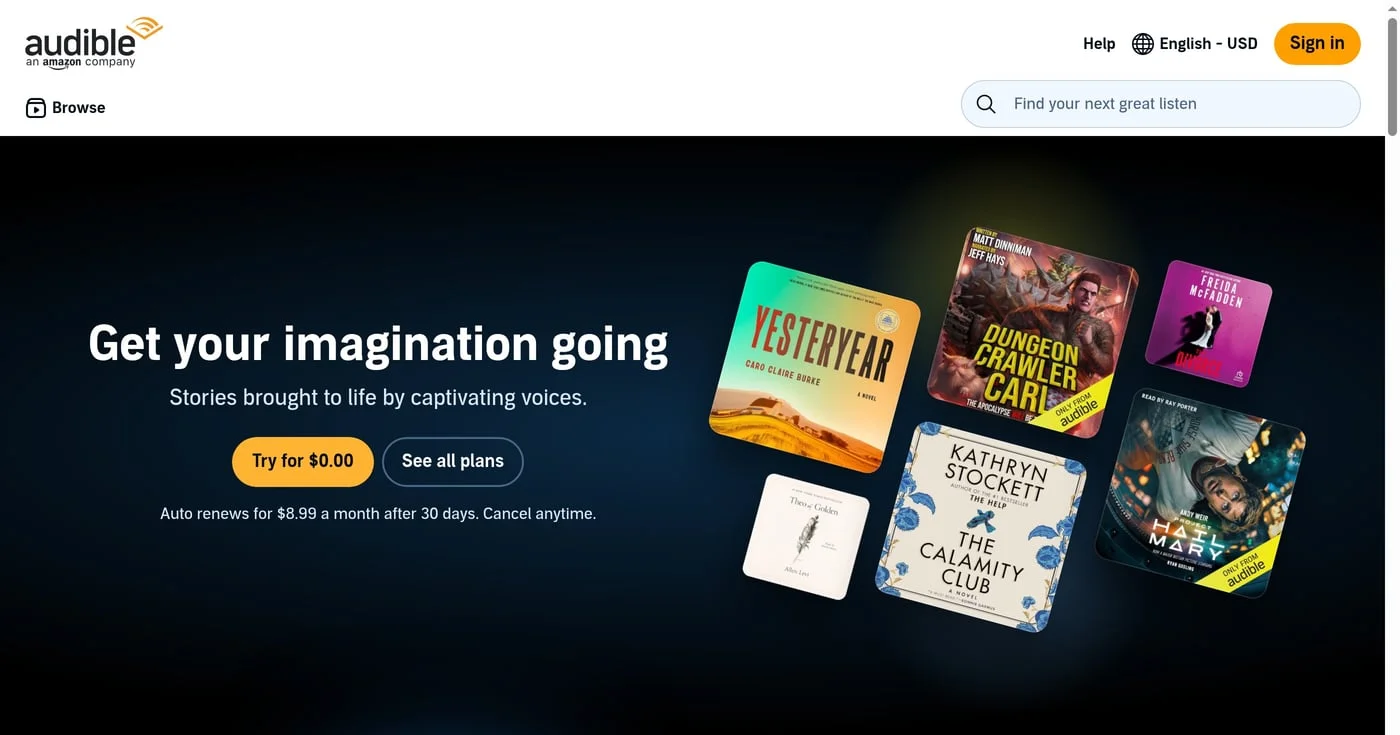
Audible Premium Plus gives you one credit per month with permanent ownership, access to the Plus Catalog (11,000+ streaming titles), and the only narrator-first search engine in the market. With 500,000+ titles, it's the largest curated audiobook catalog available and the only platform with a meaningful exclusive content library: Audible Originals, celebrity narrations, and full-cast productions unavailable anywhere else.
The platform's self-publishing pipeline (ACX) has produced breakout titles like "Dungeon Crawler Carl," which reached 140 million listening hours. If you're interested in audiobook self-publishing, ACX is the primary channel.
The key community optimization: as u/towniediva noted in r/audible in June 2026, "You need the annual plan. $89 for 12 credits. Less than $7.50 per book." Spend those credits on Audible-exclusive titles that can't be found elsewhere, and use Libby or Chirp for everything else, per the community consensus in r/audible.
Understand the three distinct tiers before subscribing. Audible Plus ($7.95/month) is streaming-only with no credits and no ownership. Audible Standard ($8.99/month) is a rental: one title per month, access lost on cancellation, no credits issued.
Premium Plus ($14.95/month) is the ownership tier. If you're building a permanent reference library, Premium Plus is the only plan worth considering.
30-day free trial includes 1-2 free credits.
Best for writers who want DRM-free files and to support indie bookstores
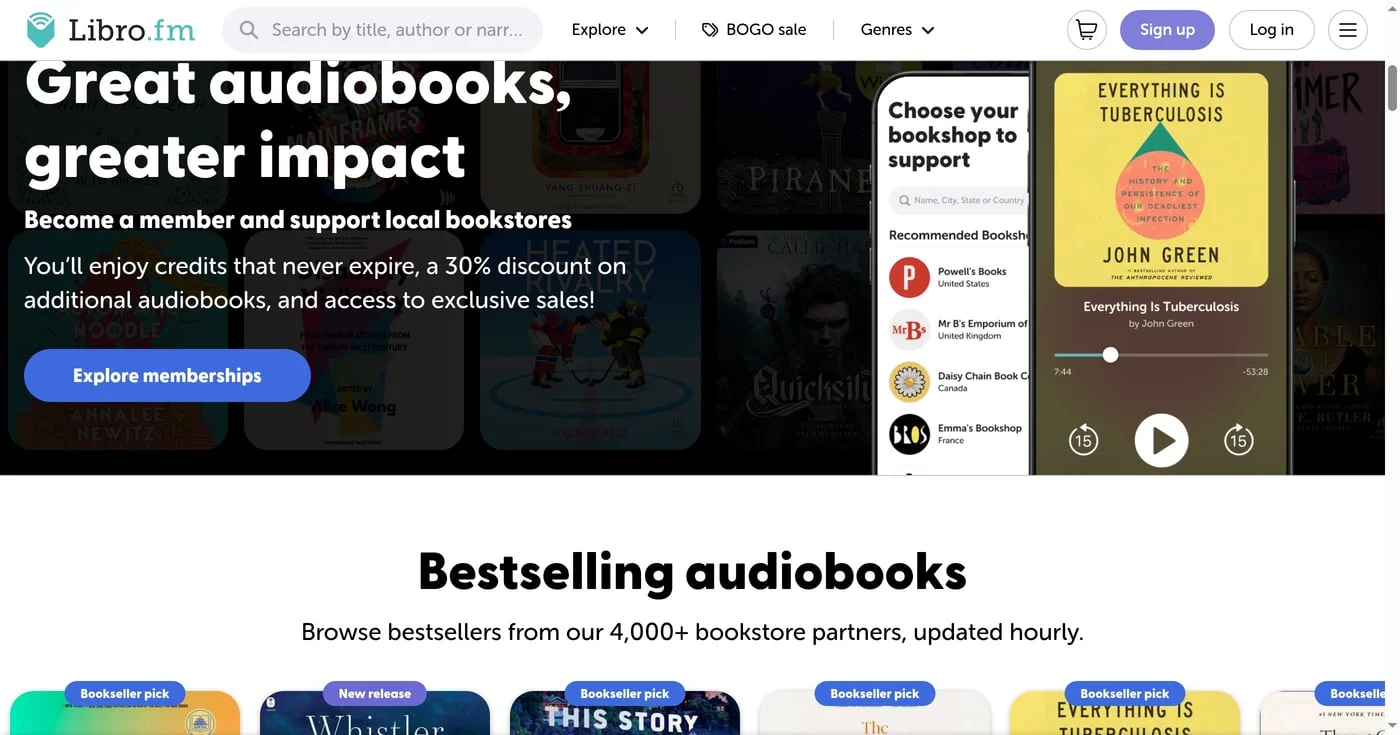
Libro.fm is the only major audiobook service that delivers actual MP3 files: DRM-free, permanently yours, usable on any device, survivable even if the company shuts down. Every other credit-based service delivers files with some form of digital lock. Libro.fm gives you the file itself.
Libro.fm is B Corp certified, 100% employee-owned, and routes a portion of every purchase to your chosen local indie bookstore. It pays higher author royalty rates than Audible and maintains a strict no-AI-narration policy, a meaningful signal for writers who care about narrator livelihood and production integrity.
As Daniel Greene explained in his audiobook service ranking: "It's also profit sharing with local bookstores... a better royalty rate if they do it. Win-win." Libro.fm launched an annual subscription in January 2026 after strong 2025 growth momentum, per Publishers Weekly.
The tradeoffs are real. As u/mehgcap noted in r/audiobooks in February 2026: "Audible has better UX and, partly because of that, I feel somewhat locked into the ecosystem. I pay $15 per month to Libro anyway, because I love what they're doing and I can afford to support them, but I find myself always going back to Audible."
Audio quality is another gap: Libro.fm downloads at 64kbps AAC versus Audible's 128kbps.
1 free credit included with trial signup.
Best for casual listeners already paying for Spotify Premium
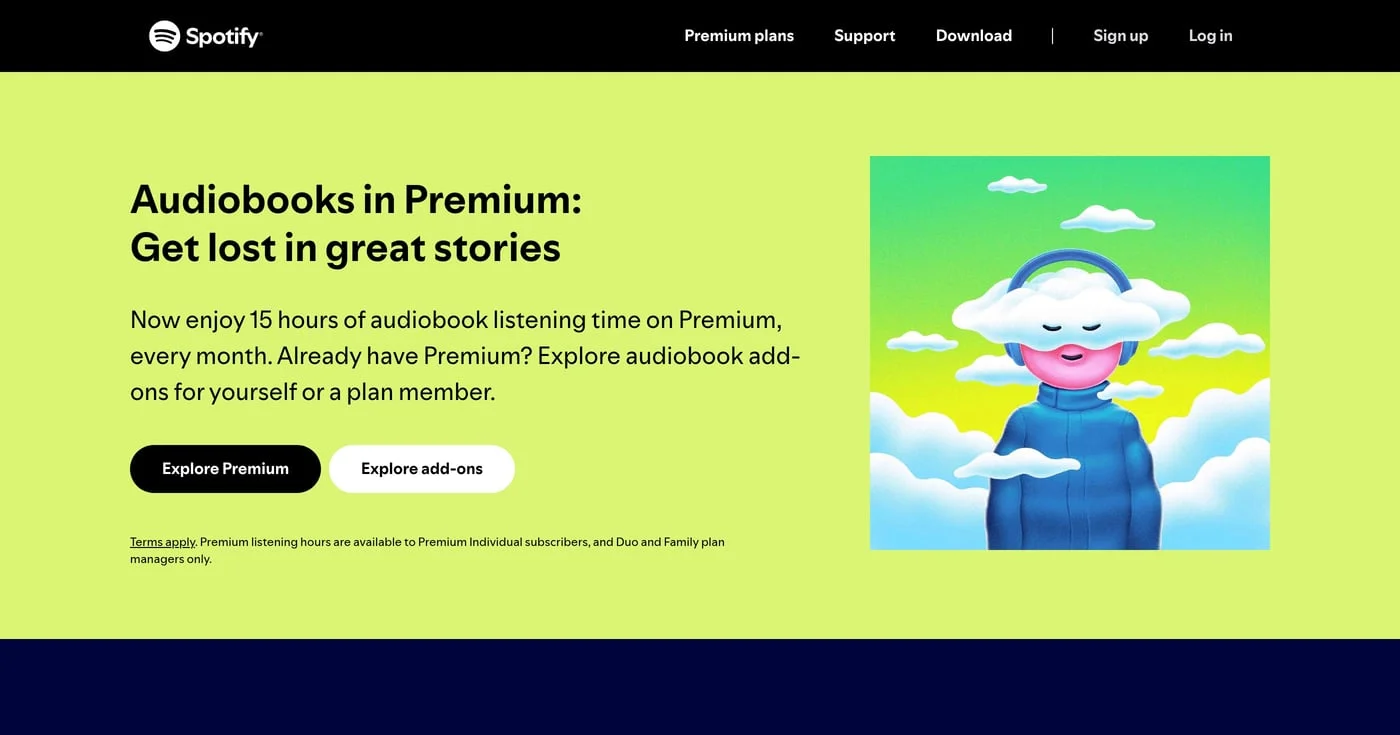
Fifteen hours of audiobook listening per month comes bundled into Spotify Premium Individual ($12.99/month) through Spotify Audiobooks. If you already pay for Premium, audiobooks cost you nothing incremental. The 700,000+ title catalog is larger by raw count than Audible, though it lacks Audible Originals and exclusive productions.
The 15-hour monthly cap is the service's central limitation. Most novels run 8-12 hours, comfortable for one listen per month. Fantasy and epic fiction regularly exceed 25-40 hours per title.
As u/FrankCobretti noted in r/audiobooks: "When I want to listen to a long book on Spotify, I start near the end of the month. That way, I'll have 30 uninterrupted hours of listening." It works, but it's a workaround.
Family and Duo plan users should verify before assuming access: non-manager accounts typically lack audiobook access, and the 15 hours is per-account, not per household member. There is no permanent ownership on Spotify Audiobooks; access is lost on cancellation.
A standalone Audiobooks Access plan ($9.99/month) is available for non-Premium users, though pricing changes apply for new subscribers after July 6, 2026.
No standalone free tier; access requires a Premium subscription or standalone plan.
Best for readers who want permanent ownership at the lowest monthly price
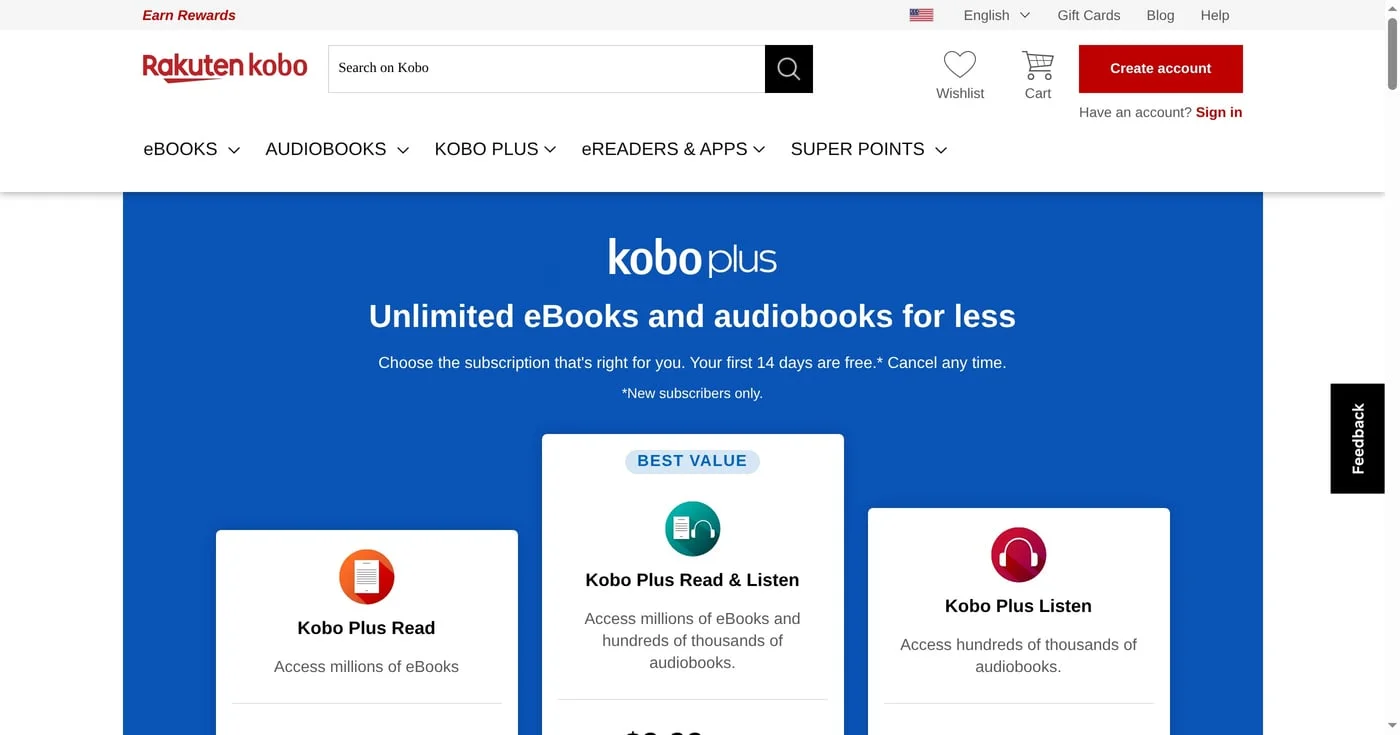
At $9.99/month, Kobo Plus Listen is the cheapest credit-based subscription with permanent ownership in the US market. That is $5/month less than Audible Premium Plus for the same core mechanic: one credit per month, credits roll over, books you purchase are yours permanently after cancellation.
The platform is available in the US, Canada, UK, Australia, and New Zealand. Kobo e-reader device owners benefit from tight ecosystem integration, but the app also works on iOS, Android, and the web. The 150,000+ title catalog covers most mainstream releases, though new titles sometimes appear later on Kobo than on Audible; that gap largely disappears for listeners who wait 3-6 months post-publication.
Independent reviewers consistently call Kobo Plus the most underrated paid subscription in the category. If you don't need Audible's exclusive content, the $9.99 price point is difficult to beat. The Read & Listen plan ($14.99/month) adds ebook access on top, making it a compelling bundle for writers who consume both formats heavily.
30-day free trial available.
Best free audiobook source for anyone with a public library card
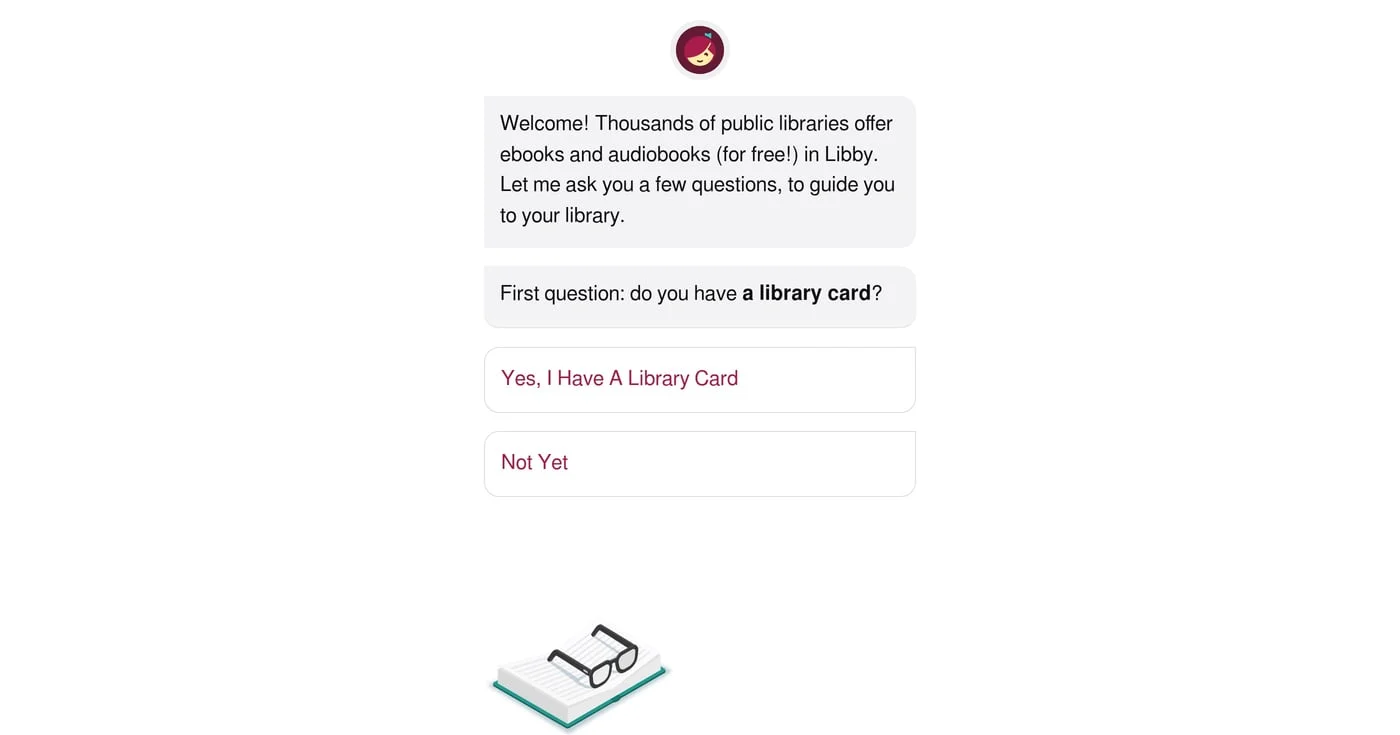
Libby is 100% free with a public library card. You borrow from your library's digital collection via OverDrive, which serves 92,000+ libraries and schools in 115 countries. Titles return automatically at the end of the loan period (typically 14-21 days), and the catalog covers most major publishers' current releases.
The catch is hold queues. A new bestseller at a busy library system can have a 14-week wait. If you plan ahead, the wait is manageable: place holds early and cycle through your queue.
If you need a specific title this week, Libby is not the right primary solution.
Both the app and catalog are free; the only cost is time. Offline downloads, CarPlay, and Android Auto support come included.
The dominant pattern in r/audiobooks is Libby as the primary source for the majority of titles (especially bestsellers: add to holds early), with Audible or Libro.fm reserved for exclusives and titles with long wait times. Many community members report spending under $5/month total by using Libby for 80% of their listening and Chirp deals for the rest.
No payment required; check eligibility through your local library system.
Best for instant access to audiobooks with no hold queues
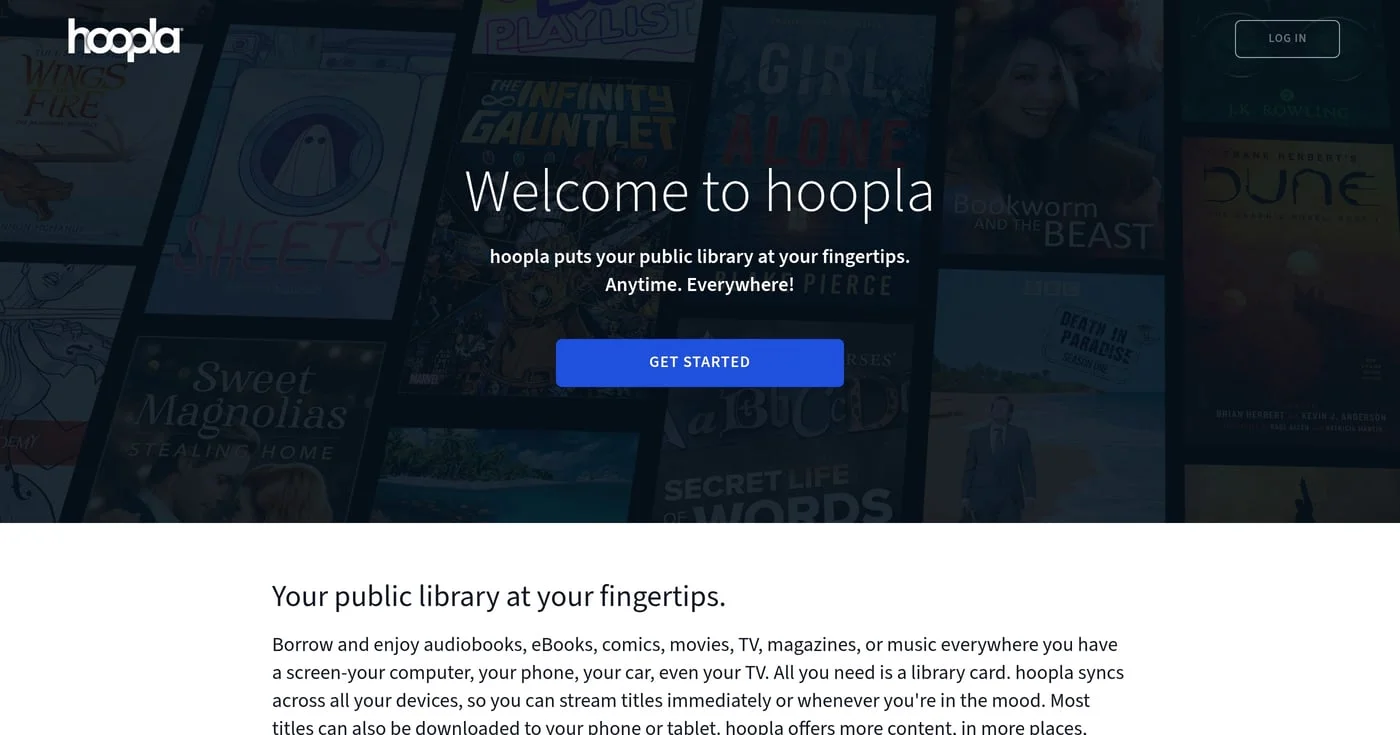
No hold queues: Hoopla is free with a library card and borrows out any available title instantly. That's the decisive edge over Libby. The monthly borrow cap (typically 4 titles per month, though some library systems allow up to 10) is the only constraint on your access.
The multi-format platform covers audiobooks, ebooks, comics, movies, and TV in one app. For audiobooks, Hoopla's selection skews toward mid-tier publishers and backlist titles rather than the same day-one new releases Libby carries. If a title isn't in heavy current demand, Hoopla likely has it available today.
The combination strategy that surfaces consistently in r/audiobooks: use Libby for current bestsellers (place holds early, wait out the queue), use Hoopla for older titles you want now. Both are free, require no credit card, and together cover most of what listeners want.
Best for occasional readers who want access to a broad multi-format library
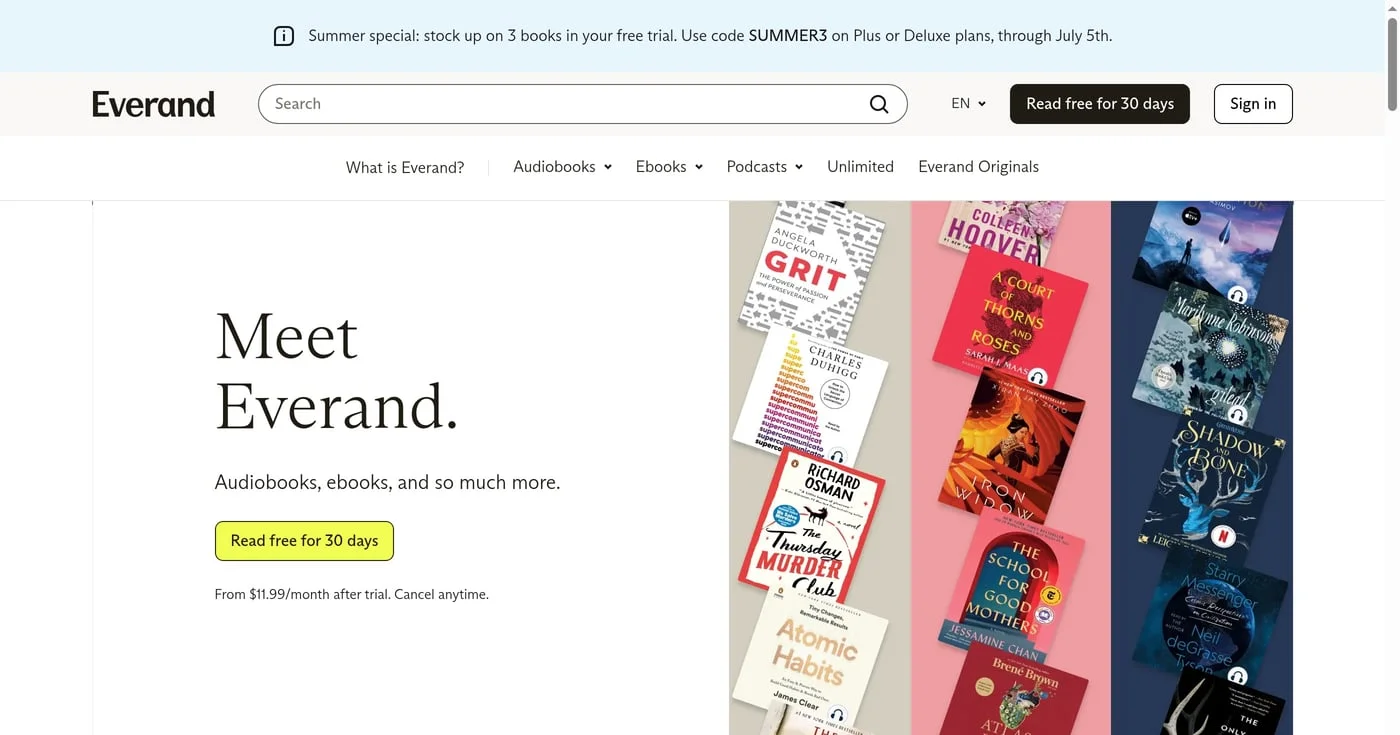
Everand (formerly Scribd) underwent its most significant structural change in 2025-2026. The "Netflix of audiobooks" unlimited flat-rate model is gone for US subscribers, replaced by a tiered credit/unlock system. Coffee And Tales captured the shift in her audiobook platform comparison:
"They changed the model from the unlimited subscription to a credit-based subscription so they basically became Audible, which is very unfortunate because they lost their edge."
What Everand still offers: a rotating catalog of approximately 20,000 curated audiobooks accessible without using an unlock, included in all tiers. The 1.5 million-title combined library spans ebooks, magazines, and the Fable book club platform (200,000 clubs, 5 million combined readers), acquired in 2025. For readers who want one platform for multiple formats, Everand's bundle is the broadest available.
The critical ownership caveat: unlocked titles on Everand are NOT permanently owned. Cancel your subscription and your unlocked library disappears. Unused monthly unlocks do not roll over.
7-day free trial available.
Best for deal hunters who want permanent ownership without a subscription
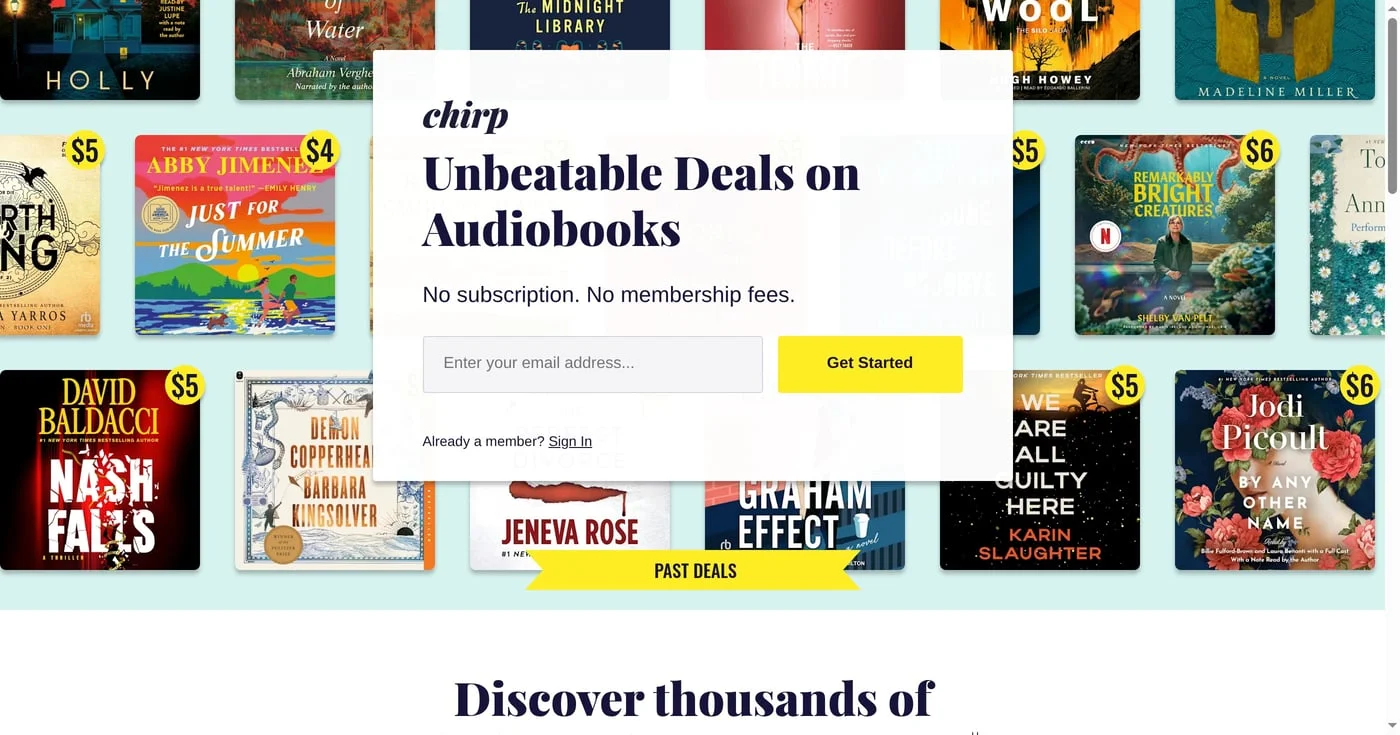
Pay per title, not per month. Chirp is the outlier on this list: a pay-per-book deal platform run by BookBub, with daily deals from major publishers at $0.99–$5.99 per title, 85-95% off retail. You create a free account, receive daily deal alerts, buy what you want, and own it permanently.
There are no monthly fees, no credits to manage, and no cancellation cliff. The books you purchase are yours. Chirp is available in the US and Canada only.
The limitation is deal-dependency: new releases are rarely discounted. Chirp works well for backlist titles, series bundles, and bestsellers that publishers discount seasonally. It does not replace a subscription for anyone who needs new releases on launch day.
The dominant use pattern on r/audiobooks is Chirp as a complement, not a primary source. Use Libby or a paid subscription for most listening, and monitor Chirp's "Freebie Fridays" and series bundle deals to build a permanent library cheaply. Titles purchased on Chirp are owned permanently and accessible via the Chirp app.
No monthly commitment; pay per title at the deal price.
Best for listeners who want maximum monthly title volume
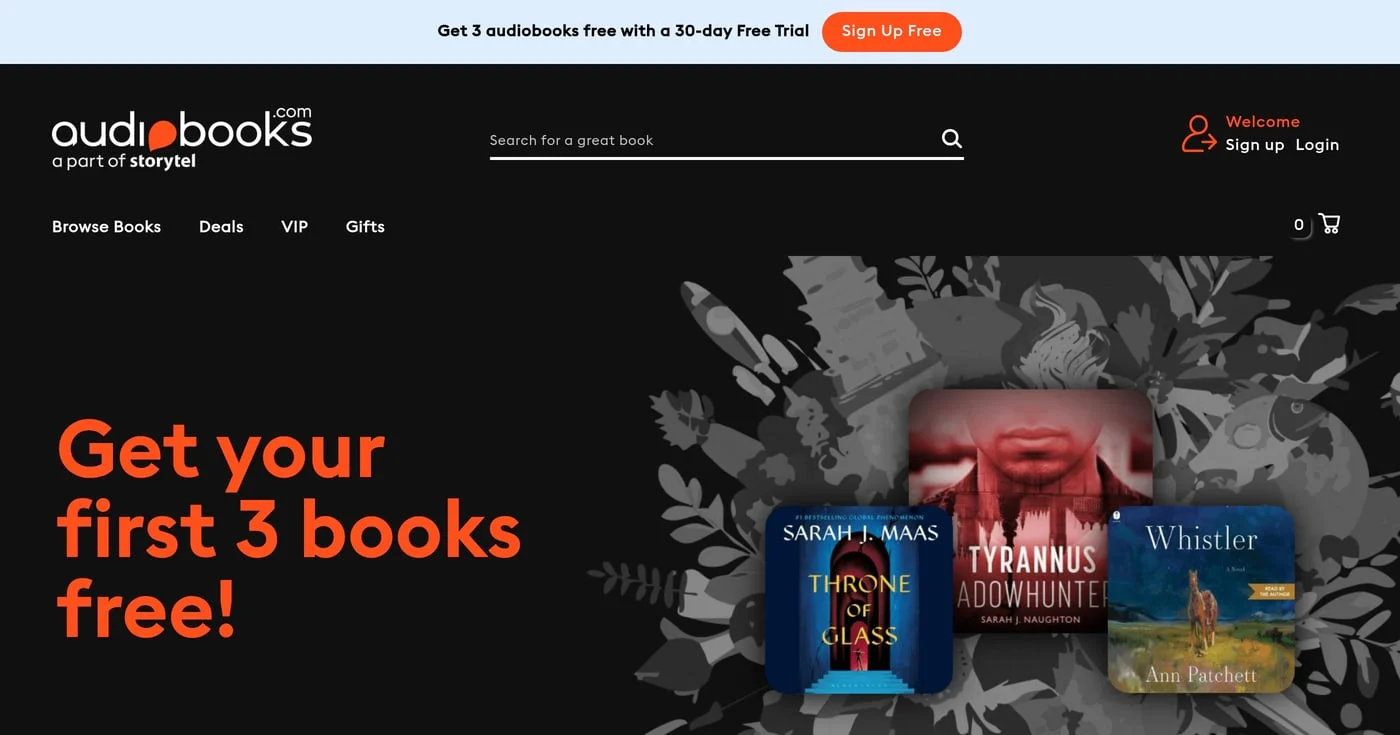
Audiobooks.com at $14.95/month delivers more titles per dollar than Audible: one owned credit plus two VIP Rewards borrows per month from a 200+ rotating selection. The VIP selection rotates through roughly 200 titles each month, and 10,000 always-free titles add further listening without using credits.
Three titles per month versus Audible's one credit makes Audiobooks.com the stronger raw-volume option if you consistently want multiple books without using Chirp or Libby as supplements. The two VIP borrows are access-only (they expire on cancellation), but the premium credit is permanently owned.
The main tradeoff: catalog depth and app polish are below Audible's standard. Titles outside the mainstream or newer releases may not be in the catalog. Audiobooks.com reports a catalog of over 500,000 audiobooks, though the VIP Rewards borrow selection rotates through roughly 200 titles per month.
The 30-day trial includes 2 books plus 1 VIP title; worth running for a month if volume matters more than exclusives or catalog depth.
30-day trial includes 2 books + 1 VIP title.
Best DRM-free budget alternative to Audible
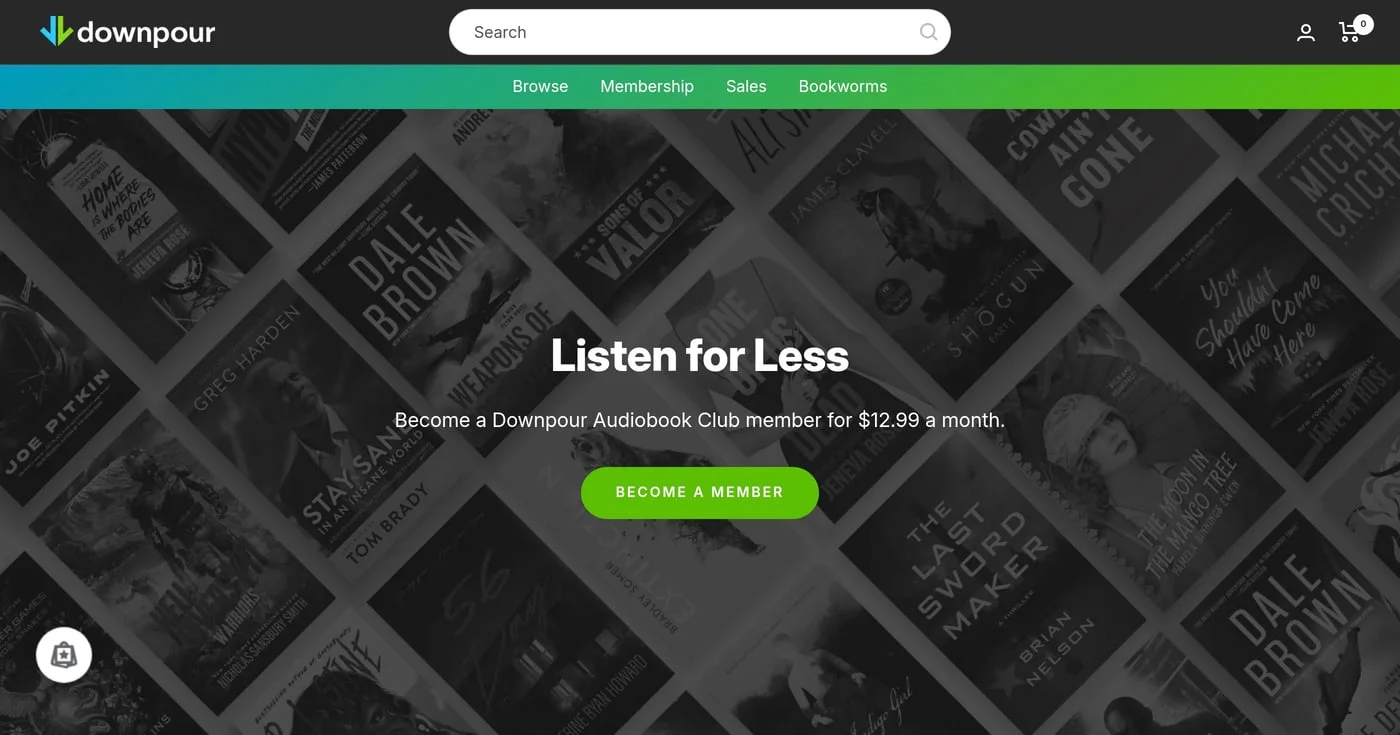
Downpour is the second major DRM-free audiobook service after Libro.fm. At $12.99/month, it undercuts Audible Premium Plus by $2/month while delivering the same core ownership benefit: DRM-free files that are permanently yours and usable on any device.
Downpour is backed by Blackstone Publishing, one of the largest independent publishers in the US, which gives it particular catalog strength within Blackstone's own titles. The overall catalog runs approximately 75,000-80,000 titles, solid for mainstream and Blackstone-published content, thinner for niche genres.
The DRM-free angle is Downpour's entire case. If file ownership matters but Libro.fm's ethical premium isn't relevant to you, Downpour is the budget path to actual file ownership. A rental option (30-60 days, extendable) is also available for one-time listens, useful for travelers or listeners who want a specific title without committing to ownership.
The tradeoffs are significant: no free trial, an app that lags behind competitors in polish, and a catalog far smaller than Audible's. Know what you're trading before signing up.
No free trial offered.
Best for nonfiction professionals who want key insights in 15 minutes
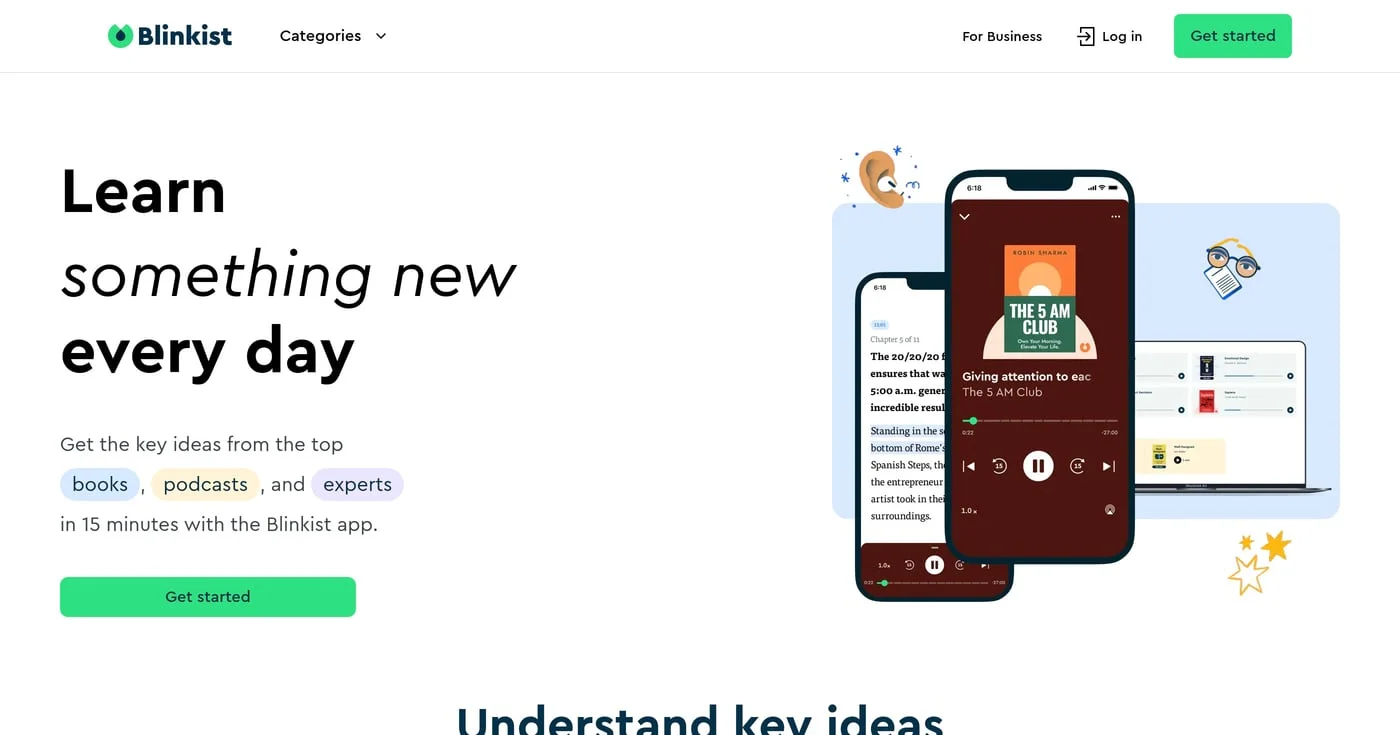
Blinkist delivers 15-minute audio summaries of 6,500+ nonfiction and business titles, not full recordings. If you want the complete narrative experience of a memoir, novel, or literary nonfiction, Blinkist is the wrong tool. If you want to pre-screen a business book before committing 10 hours, or extract key ideas during a 20-minute commute, it fills a distinct niche.
The platform has been downloaded 23 million times and maintains a strong corporate learning footprint. Blinkist's LinkedIn positioning frames it explicitly as an L&D and professional development tool, suggesting its core audience is business professionals screening management and strategy titles, not literary fiction or narrative nonfiction readers.
If you're a writer, Blinkist works as a research filter. You can skim 10 nonfiction titles in the time it takes to complete one full audiobook.
When a summary earns a full read, you can then get the complete book through Libby, Audible, or Libro.fm. At $14.99/month for summaries only, it's expensive relative to what it delivers; the annual plan at $79.99/year ($6.67/month effective) improves the value significantly.
7-day free trial available.

Writing about cybersecurity is like trying to explain how a car engine works to someone who just wants to drive.

Clients expect SEO but rarely explain it. Search intent, keyword briefs, article structure, links, and AI Overviews, plus how to charge more for SEO writing.
Free plagiarism checkers average 43% detection vs 88% for top paid tools. Compare 15 options by accuracy scores, pricing, ownership, and use case for 2026.
Professional publishing supported by generous companies you should check out.


