


12 AI Text Generators Tested for Output Quality in 2026
Claude leads every 2026 prose benchmark. 12 AI text generators tested by output quality, pricing, and workflow fit — with a three-tier breakdown and comparison
Updated 21 min read

Claude leads every 2026 prose benchmark. 12 AI text generators tested by output quality, pricing, and workflow fit — with a three-tier breakdown and comparison
Claude Pro leads every major independent prose benchmark in 2026, scoring 9.4/10 in a 90-day head-to-head test and winning 4 of 8 blind-test rounds against ChatGPT. ChatGPT Plus is the best all-rounder: image generation, web search, code, and writing in one tool at the same $20/month price. Jasper is the top choice for marketing teams that need brand consistency and SEO scoring built into the workflow.
Below, 12 tools ranked by use case, output quality, and pricing tier.
97% of content marketers plan to use AI writing tools in 2026, up from 64.7% in 2023. The category is maturing fast, and the quality gaps between tiers are smaller than most listicles admit.
Software | Best For | Key Features | Pricing | Free Plan | Platforms |
|---|---|---|---|---|---|
Long-form prose | 1M token context, file analysis, Projects | Yes (rate-limited) | Web, iOS, Android | ||
Versatile writing | GPT-5, image gen, web search, code | Yes (rate-limited) | Web, iOS, Android | ||
Marketing teams | Brand IQ, Surfer integration, AI Agents | 7-day trial | Web | ||
SEO + GEO content | GEO tracking, Sonic Editor, 100+ templates | 10,000 free words | Web | ||
Performance copy | Predictive scoring, 82% accuracy, brand voice | 7-day trial | Web | ||
Ranking content | SERP analysis, content score, keyword clustering | No | Web | ||
GTM workflows | 90+ templates, workflow automation, Claude 4.6 | Yes (2,000 words/mo) | Web | ||
Google Workspace | Workspace integration, deep research, image gen | Yes (limited) | Web, iOS, Android | ||
Affordable SEO | Research-first briefs, content optimization | No | Web | ||
Fiction writing | Story Engine, custom fiction model, Beats | 1 chapter free | Web | ||
Budget blogging | One-click articles, SERP-based outlines, images | No | Web | ||
High-volume copy | 40+ templates, 30+ languages, API access | Yes (10K chars/mo) | Web, Chrome ext. |
12 best AI text generators compared: pricing, free plans, and best use cases
Best for individual writers who need the highest prose quality
Claude Pro ($20/month) ranks first across every major independent prose benchmark in 2026. ToolTester scored it 9.4/10 across 15 tools over 90 days of real client projects. In a blind test by AI blew my mind with 134 participants in February 2026, Claude won 4 of 8 rounds; ChatGPT won 1 of 8.
For essays, long-form articles, research reports, or any writing where argument structure and voice matter, Claude sets the standard.
The key differentiator is context capacity: Claude's context window runs up to 1 million tokens, compared to ChatGPT's 128K. You can paste in a 300-page PDF, your published writing samples, and style notes, then ask Claude to match your voice on a new piece. That context capacity changes what's practically achievable for long-form research writing.
Free tier note: Claude.ai's free tier is rate-limited but delivers output quality that matches or exceeds Rytr's paid $9/month plan. If budget is your first constraint, test the free tier before paying for any budget-tier tool.
Best for writers who need one tool to handle everything
ChatGPT Plus ($20/month) earns the versatility advantage. Image generation, web search, code execution, voice mode, and text generation all live in one interface. GPT-5 became available on Plus in May 2026, adding a meaningful jump in reasoning capability.
If your workflow includes writing a blog post, pulling supporting statistics, generating a diagram, and pasting it into a deck, ChatGPT handles the full sequence without switching applications.
On raw prose quality, ChatGPT scores slightly below Claude. StackJot ranks Claude first and ChatGPT second across 12 tools. But for most practical writing tasks, the quality gap is narrow enough that ChatGPT's built-in tool breadth tips the balance for writers who need more than text output.
u/Whiskyandcrypto in r/Blogging describes a hybrid workflow: "Gemini has better keyword insights so it's a great resource to brainstorm title ideas, headers, long tail keywords, etc. ... This is where I'll take it to ChatGPT. ChatGPT is better for creativity and access to search and review links." That multi-tool approach captures how practitioners who get the most from AI text generators actually use them.
Best for marketing teams that need brand consistency at scale
Jasper ($49/month) has pivoted from AI writing assistant to AI marketing agent platform, and that distinction matters before you pay the premium.
If you're an individual writer looking to improve prose quality, Claude or ChatGPT will serve you better at $20/month less. If you're running a marketing team that needs consistent brand voice across multiple writers, built-in SEO scoring, and multi-step approval workflows, Jasper's depth justifies the cost.
Jasper's Brand IQ system stores your visual guidelines, tone of voice, style guide, and brand knowledge base. Every piece your team generates draws from that foundation, which reduces editing cycles on brand compliance. The built-in Surfer SEO integration lets you optimize for target keywords without leaving the editor.
Jasper raised $125 million and has 105,000+ enterprise customers. Its $1.5 billion 2022 valuation was cut after ChatGPT commoditized basic text generation. The current platform includes AI Agents, Content Pipelines, Canvas, Grid, and AI Studio, features that go well beyond text generation and signal where Jasper's product investments are focused.
All plans include a 7-day free trial.
Best for teams tracking content visibility in AI search
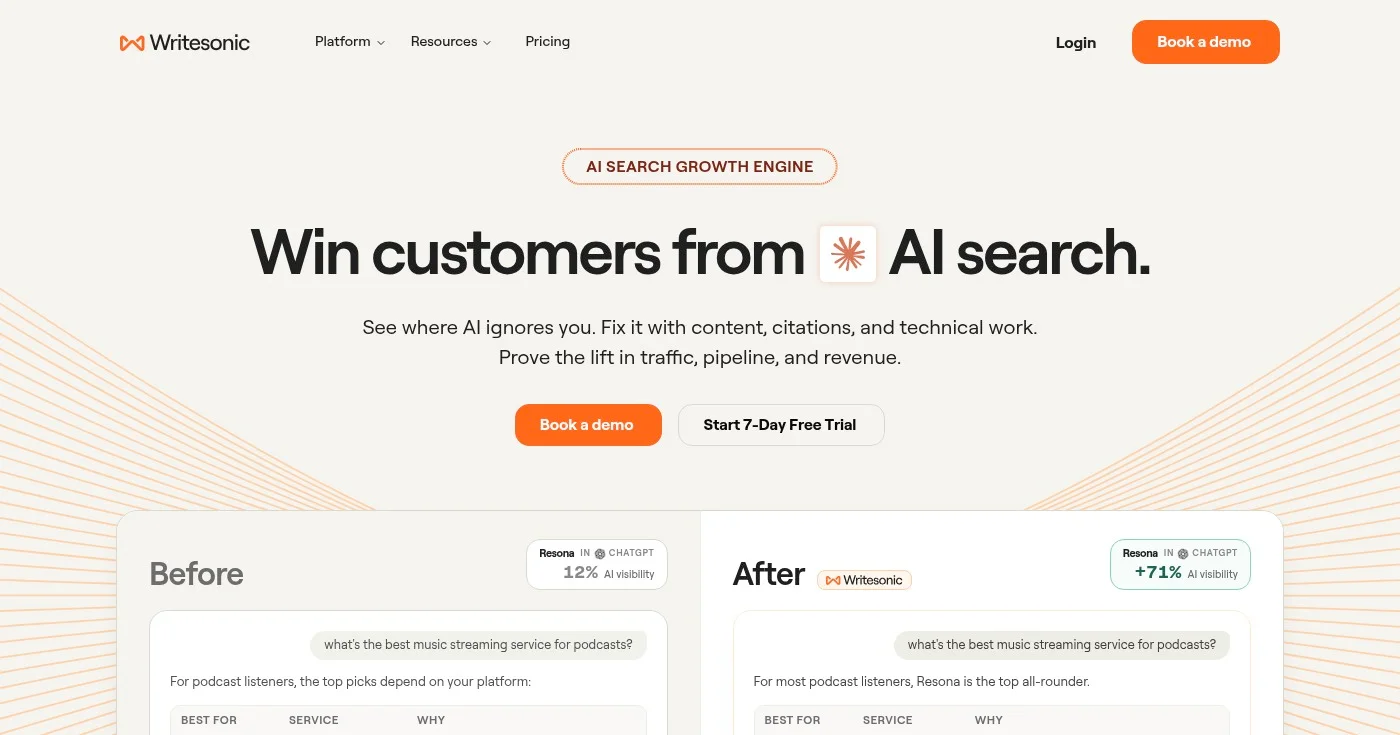
Writesonic has made the most dramatic pivot of any major AI text generator. Where it once competed on copywriting templates and blog post generation, it now positions itself as a Search Growth Engine, tracking how your content appears in ChatGPT, Perplexity, and Google's AI Overviews. The GEO (Generative Engine Optimization) tracking features are what set it apart from every other tool in this list.
For traditional text generation, Tested.media's March 2026 benchmark gave Writesonic the highest SEO match score of any tool tested (10/10) and 8/10 on prose quality. But the GEO visibility tracking that defines the platform's 2026 pitch is locked to the $249/month Enterprise plan, putting a hard ceiling on who can access the full product.
Writesonic's SOZO agency case study shows a +10% AI visibility increase and +30% visibility on Gemini within 30 days using the GEO platform during a site migration. That kind of measurable lift on AI search surfaces is what the Enterprise plan targets.
Best for performance marketers who need to predict copy outcomes
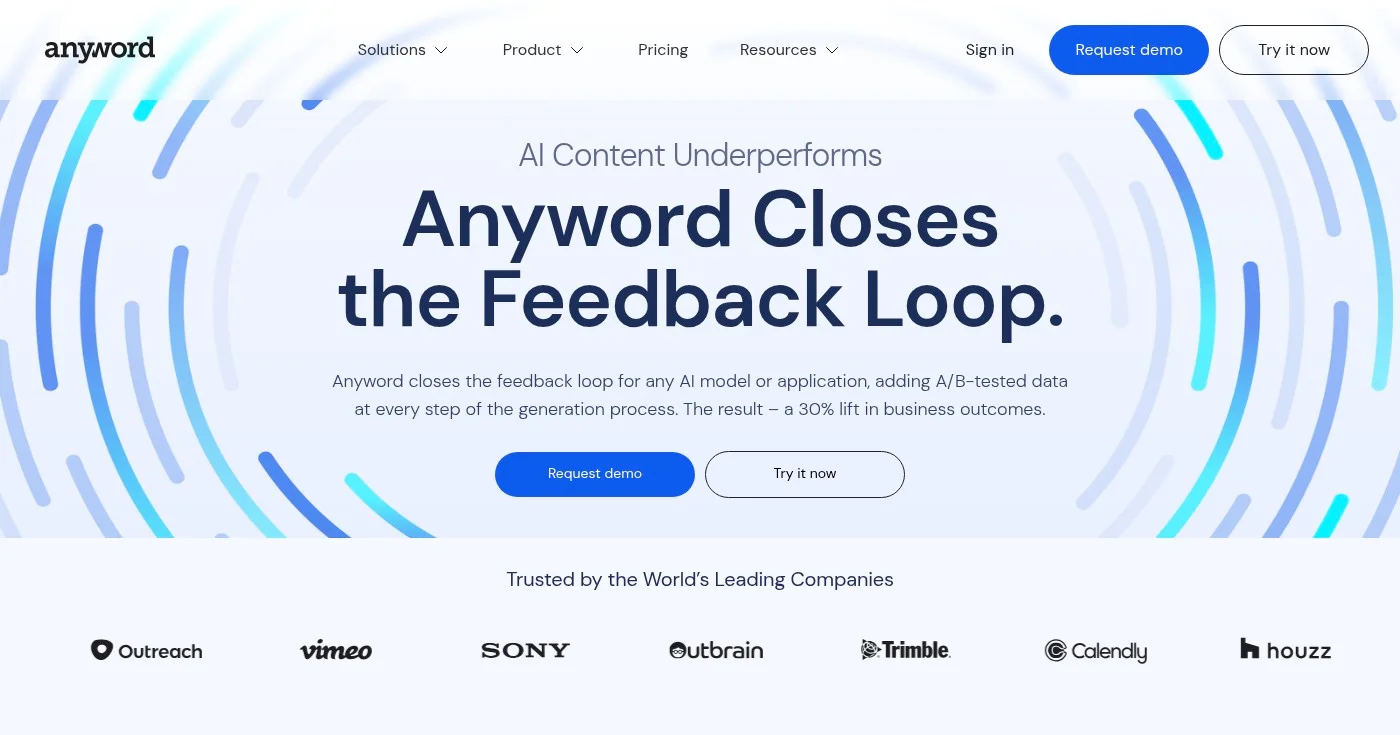
Anyword ($49/month) solves a problem the other tools don't attempt: predicting whether your copy will perform before you publish it. The platform's predictive performance scoring uses training data from actual campaign results across platforms. It achieves 82% accuracy predicting copy performance, compared to 52% for GPT-4o used alone.
For ad copy, email subject lines, and landing pages where conversion is the success metric, that prediction layer adds genuine value.
Anyword is LLM-agnostic and uses enterprise-grade data privacy, your inputs don't train the model. The platform claims a 30% lift in business outcomes for teams using predictive scoring consistently, and has more than 1 million users across advertising and performance marketing teams.
Anyword's scope is short, high-stakes copy: Facebook ads, Google ads, email subject lines, push notifications.
For blog posts and articles, Claude or ChatGPT will produce stronger output at a lower price.
All plans include a 7-day free trial with 2,500 credits.
Best for content teams where Google rankings are the primary success metric
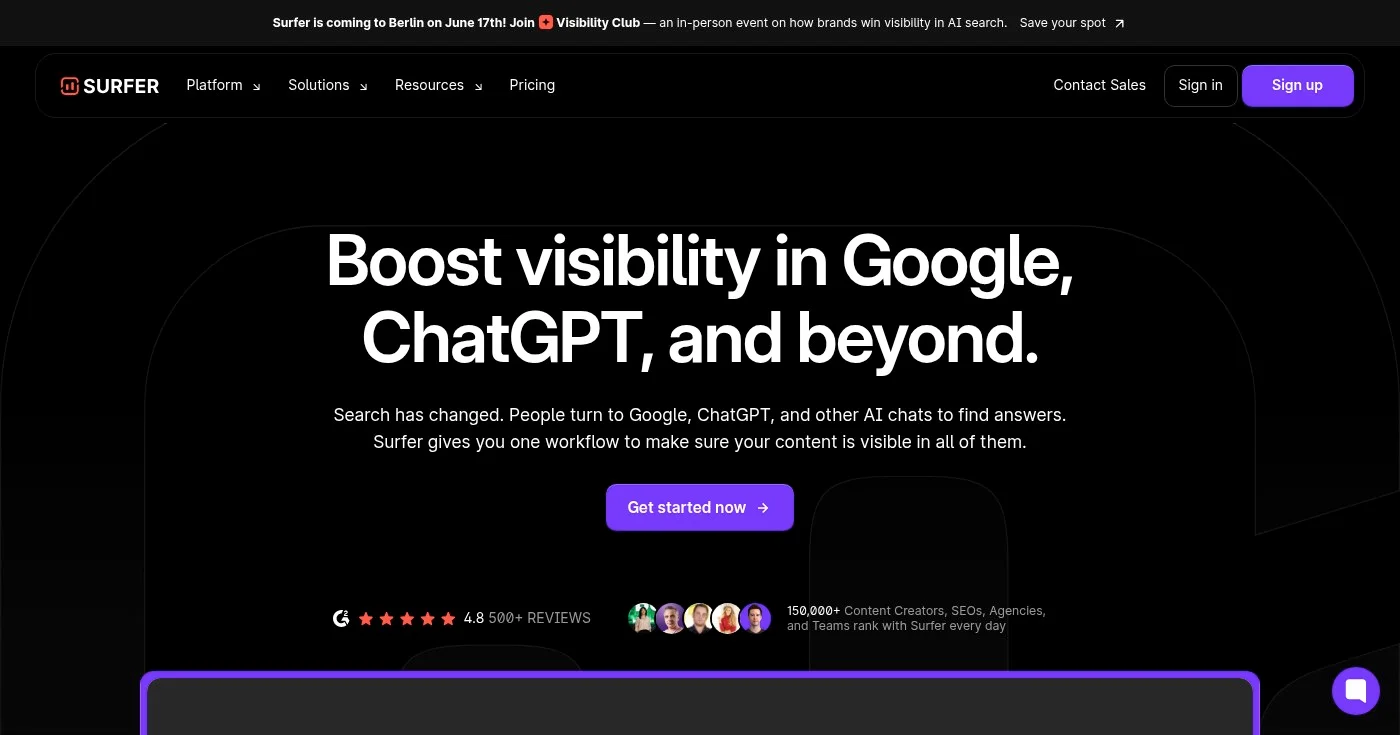
Surfer AI ($89/month) bundles keyword research, SERP analysis, and AI content generation into one workflow. Where most AI text generators hand you a draft and leave SEO for later, Surfer builds the optimization into the generation process. Surfer analyzes the top-ranking pages for your target keyword, extracts the structural signals, and outputs a draft calibrated to the same patterns.
ToolTester rated Surfer AI 8.7/10 in its 90-day evaluation, the highest SEO content score in the benchmark. The editing experience shows a real-time content score as you write, which catches optimization gaps before publishing rather than after.
The limitation is price. At $89/month with no free tier, Surfer AI requires volume justification.
A content team publishing four or more SEO articles per week will recover the cost quickly. A solo blogger publishing once a week won't.
No free plan available. 7-day money-back guarantee.
Best for sales and marketing teams running GTM workflows
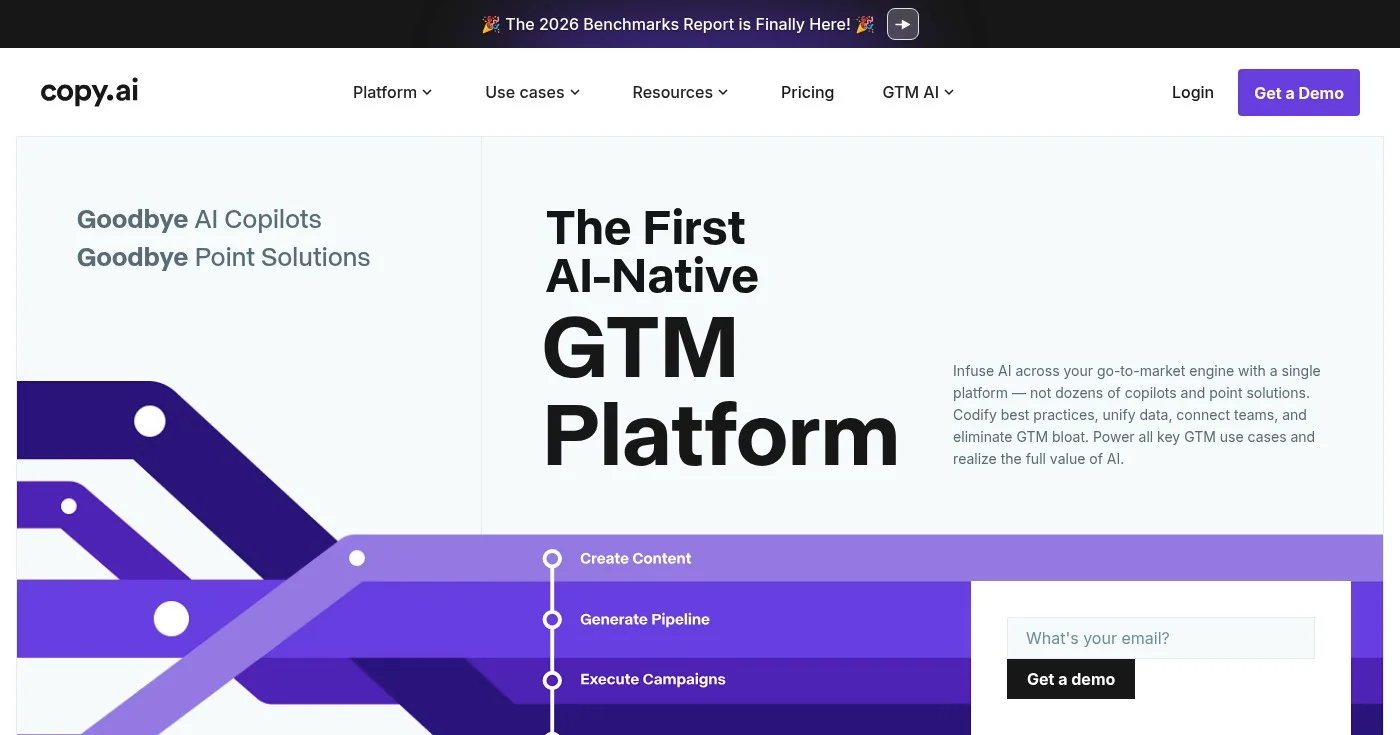
Copy.ai ($29/month) has pivoted furthest from its text-generator origins. It's now a GTM (Go-to-Market) AI Platform: automated prospect research, personalized outreach sequences, content pipelines, and CRM integrations all under one roof. The 90+ copy templates that built Copy.ai's reputation are still there, but they're increasingly a side feature.
For individual writers, Copy.ai is a reasonable option: clean interface, Claude 4.6 powering some tools, and a $29/month price easier to justify than Jasper's $49. The free plan provides 2,000 words per month, enough to evaluate output quality before paying.
One flag: Copy.ai was acquired by Fullcast in October 2025. Its product roadmap under new ownership is uncertain. Existing features remain stable, but major new writing-focused development is less likely when the acquirer's core business is sales operations software.
Best for writers working inside Google Workspace
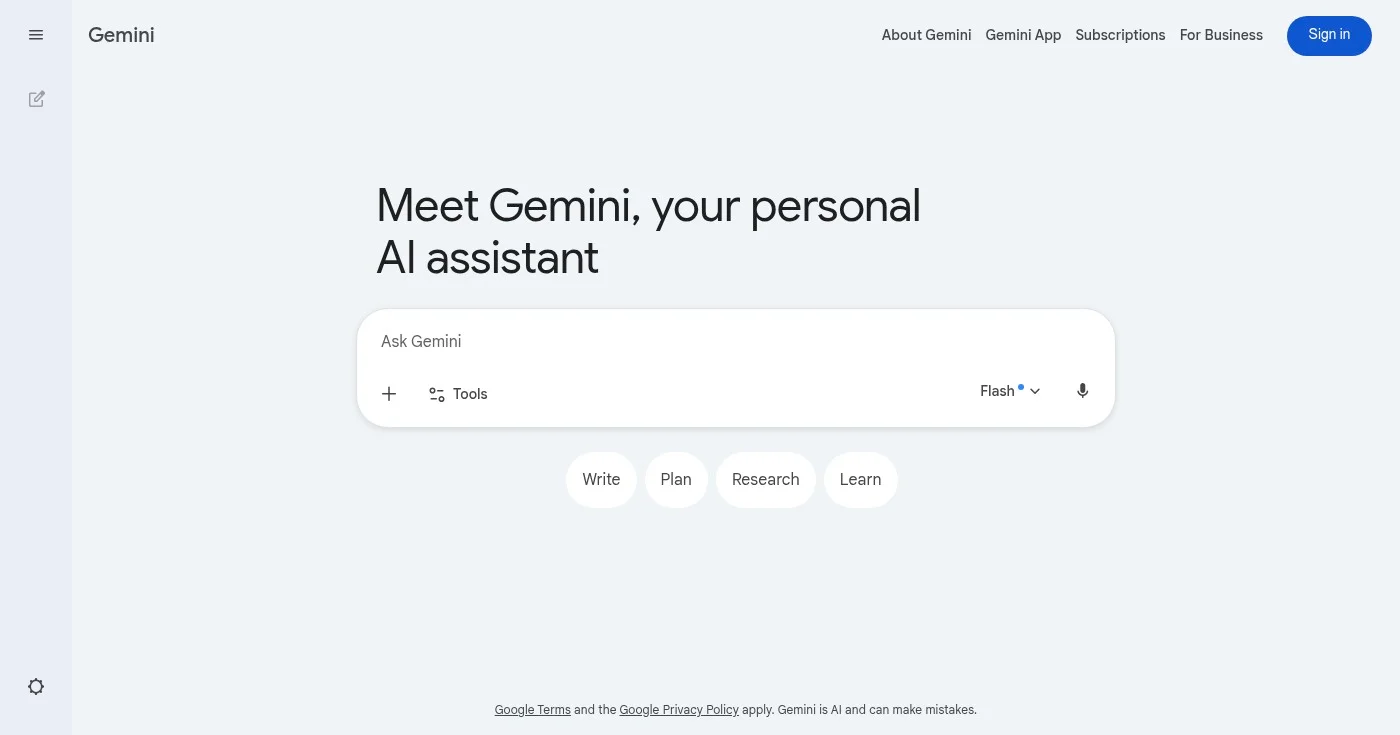
Gemini Advanced ($20/month, included in Google One Premium) is the natural choice if your work lives in Google Docs, Sheets, Gmail, and Drive. Gemini integrates directly with all four, which means you generate, edit, and refine text inside the tools where that text gets used, without copy-pasting between applications.
The AI blew my mind blind test (134 participants, February 2026) ranked Gemini second behind Claude, ahead of ChatGPT (which won just 1 of 8 rounds). Practitioners on Reddit find Gemini strong for keyword research and outline brainstorming. On r/Blogging, u/Whiskyandcrypto describes the same workflow: Gemini for keyword insights and headers, then ChatGPT for drafting.
At $20/month (the same price as Claude Pro and ChatGPT Plus), Gemini Advanced doesn't stand out on text quality alone. Its value is integration depth for Google-centric workflows.
Best for budget-conscious SEO writers who need research built into their workflow
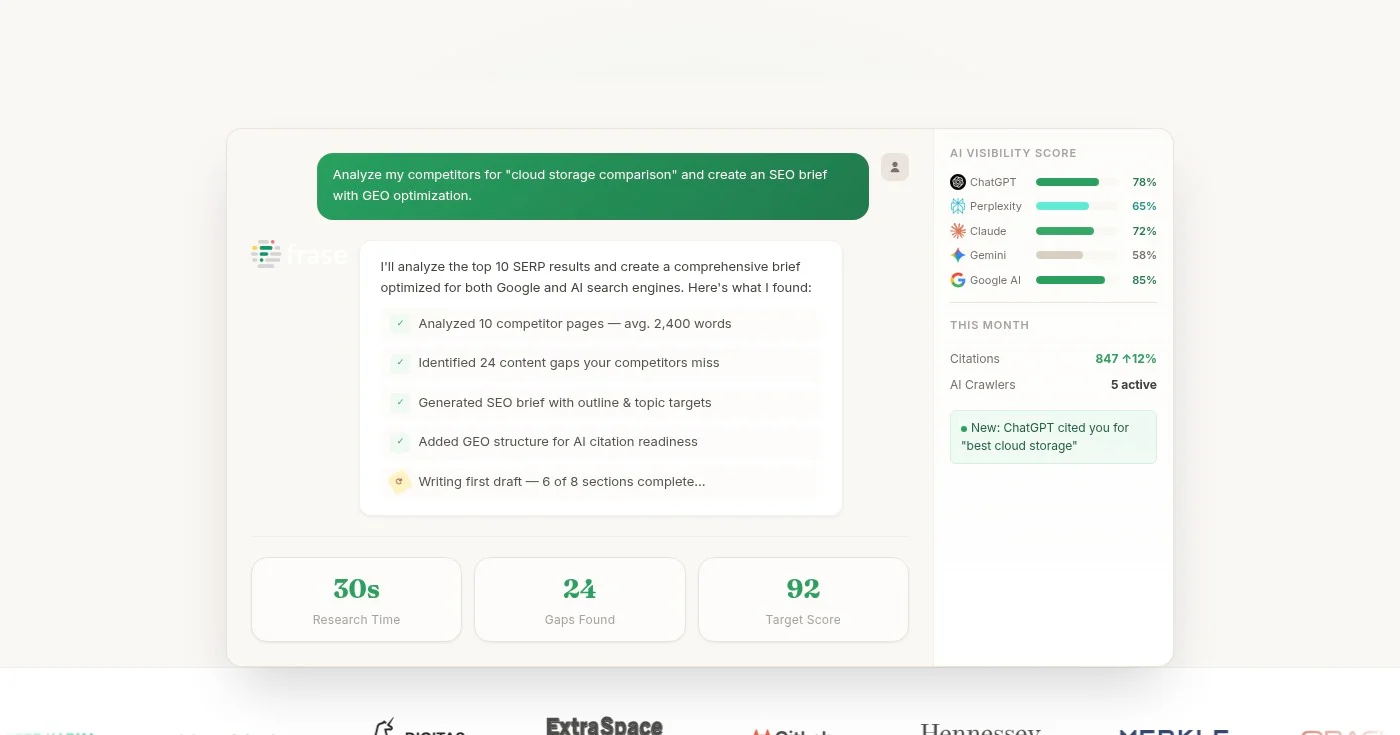
Frase at $12.66/month (billed annually) is the most affordable dedicated SEO writing tool in this list. ToolTester's 90-day benchmark gave it 8.0/10, the highest score for any tool priced below $20/month. The research-first approach sets Frase apart: it pulls top SERP results for your target keyword, builds a brief based on what's ranking, and gives you a structured outline before writing.
For solo SEO content creators publishing consistently, Frase solves a real workflow problem. You get topic research, brief creation, AI-assisted drafting, and content scoring in one tool at a price point that doesn't require a large content operation to justify.
The limitation is prose quality. Frase's AI-generated drafts require heavier editing than Claude or Jasper output. The platform's value is in the research scaffolding, not the prose.
Best for fiction writers who need a model trained on literary prose
Sudowrite ($19/month) is the only AI text generator in this list designed exclusively for creative fiction. Every other tool treats fiction as a secondary use case. Sudowrite's custom fiction model was trained on literary fiction, and the difference in output is measurable.
The Nerdy Novelist, a YouTube reviewer, described Sudowrite as getting you '80% of the way there rather than the 50% of the way there that you might get with the other chat models.'
The Story Engine feature handles full novel-length structure: Beats, Chapters, Arcs, and a dedicated outline view. If you're writing a 90,000-word manuscript, Sudowrite's context management suits the task better than maintaining coherence across hundreds of separate ChatGPT conversations.
Sudowrite doesn't handle SEO, marketing copy, or non-fiction content. That focus is deliberate, and it's why the tool earns its place in this list despite the narrow scope.
1 free chapter available on signup.
Best for budget bloggers who need SEO output without manual setup
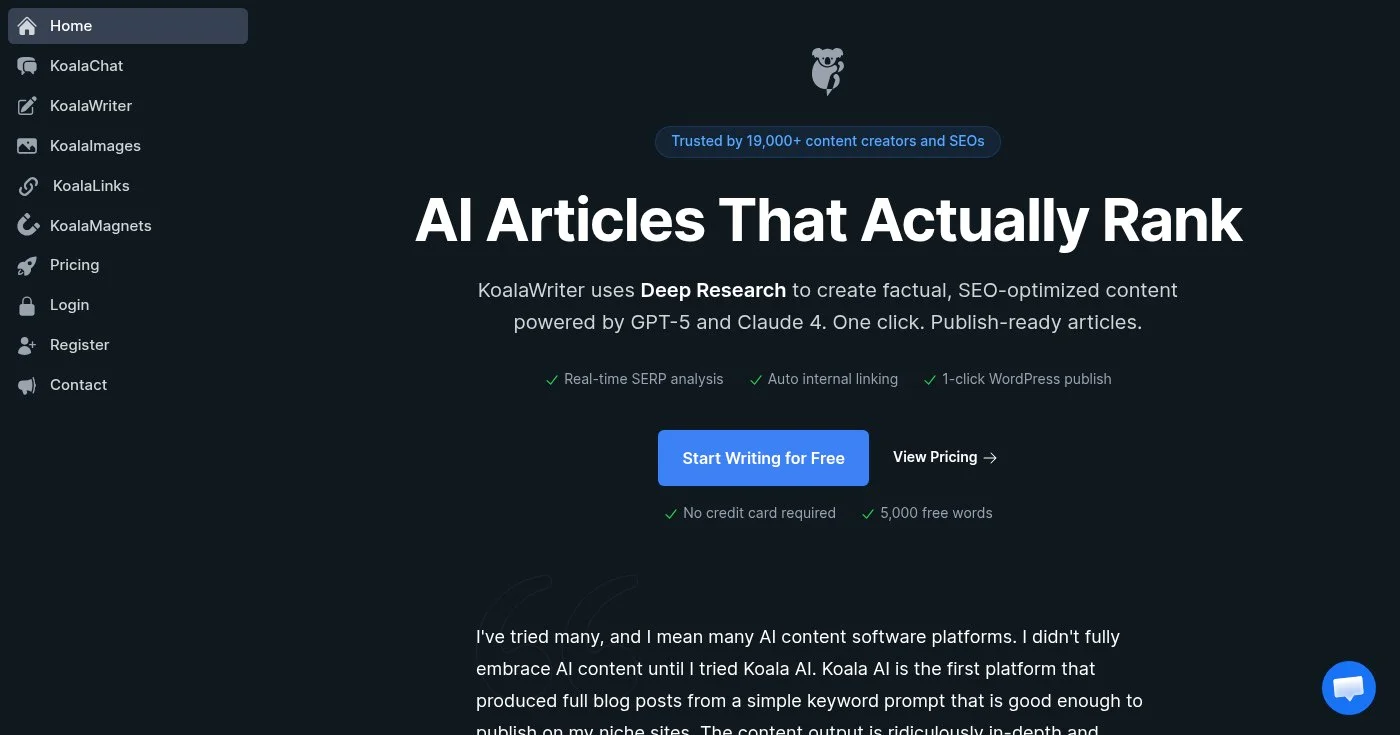
Koala AI at $9/month produces long-form blog posts from a single keyword input. The generator pulls live Google and Amazon data to inform the output, generates SERP-aware outlines, and includes images in the final draft. For bloggers who publish high-volume, low-complexity content, Koala removes most of the manual setup that tools like Frase or Surfer require.
Tested.media's March 2026 benchmark gave Koala AI 7/10 for prose quality and 9/10 for SEO, a useful combination at the $9 price point, and notably stronger SEO performance than tools priced significantly higher. Koala uses a better underlying model than Rytr, which uses older LLMs per independent testing.
The limitation is predictable: Koala AI produces volume, not voice. Output needs editing to sound human. If you publish three or four posts per week and prioritize SERP positioning over brand distinctiveness, Koala gets the job done at a price few competitors match.
Best for high-volume copy at a hard price ceiling
Rytr ($9/month) has 8 million users and 40+ templates covering blog posts, real estate listings, recruiter outreach, and more. If you need to generate large quantities of short-form copy at the lowest possible cost, Rytr's Saver plan delivers. The free plan provides 10,000 characters per month with no credit card required.
What Rytr doesn't deliver is quality comparable to the tools above it on this list. Tested.media's benchmark scored it 6/10 on prose quality, the lowest score in the study, with the highest editing time: 60 minutes per article versus Claude's 25 minutes. Zapier's review found Rytr relies on cheaper or older LLMs than market leaders.
Claude.ai's free tier outperforms Rytr's paid plan on prose quality. If quality is your primary criterion, Rytr is the wrong tool. If you need 10,000 characters per month and can't spend more than $9, the free plan covers that exactly.
One flag: Rytr faced an FTC enforcement action in December 2024 over an AI-generated testimonial and review service. The FTC vacated that consent order in December 2025, but the underlying concern about AI-generated reviews remains relevant for teams with brand reputation requirements.
One consideration: an AI text generator accelerates content production but doesn't replace a content strategy.
"the CEO got in touch with me, asking me to come back to edit the slop they made in that timeframe and write some posts from scratch, because Google has been penalizing AI content, and the blog didn't appear in the SERPs anymore."
u/sofiundomiel in r/freelanceWriters
The tools in this list create drafts faster; human judgment still determines whether those drafts perform.

Writing about cybersecurity is like trying to explain how a car engine works to someone who just wants to drive.

Clients expect SEO but rarely explain it. Search intent, keyword briefs, article structure, links, and AI Overviews, plus how to charge more for SEO writing.

Free plagiarism checkers average 43% detection vs 88% for top paid tools. Compare 15 options by accuracy scores, pricing, ownership, and use case for 2026.
Professional publishing supported by generous companies you should check out.


